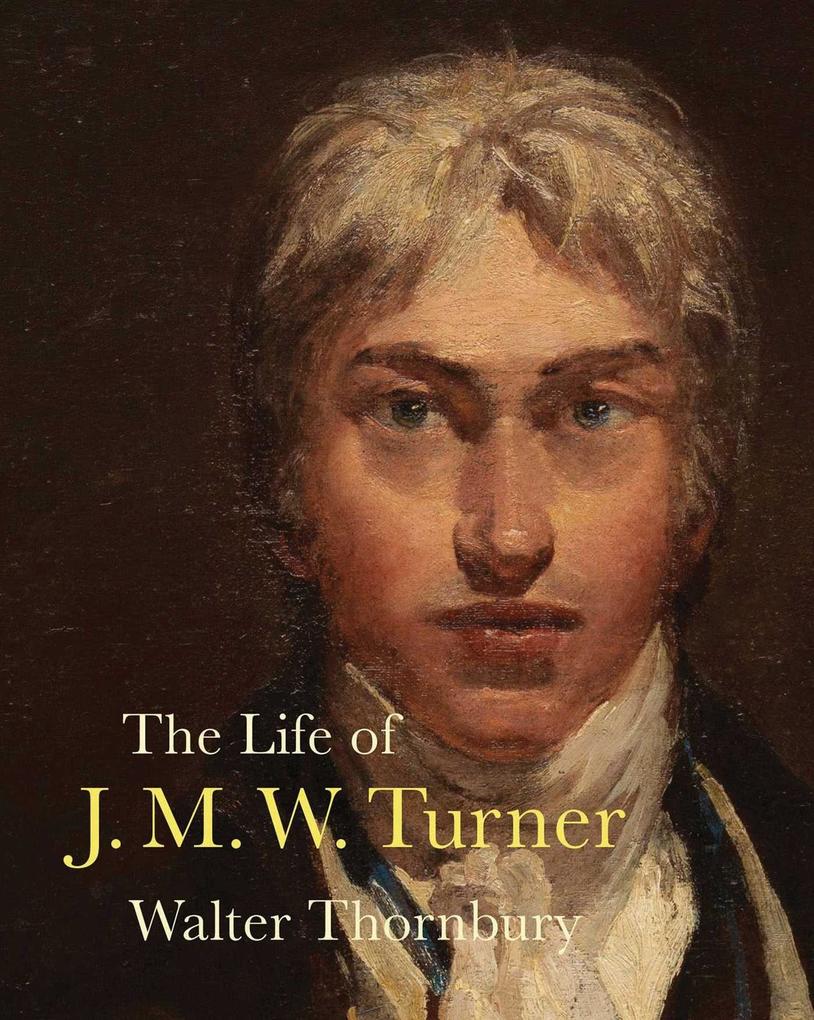
Ian Warrell’s expert, amply illustrated arrangement of Walter Thornbury’s illuminating biography of England’s greatest painter, the enigmatic and intensely private J. M. W. Turner.
Joseph Mallord William Turner (1775–1851) is without contest England’s greatest painter – as his contemporaries were quick to admit, even when they could not understand his increasingly abstract art. Yet, despite achieving fame young, the man himself was so intensely private as to be almost unknown. Both brusque and kindly, tight-fisted and generous, taciturn and witty company, he remained a fascinating enigma and source of many legends.
Soon after Turner’s death the journalist, critic and novelist Walter Thornbury began collecting anecdotes from friends and colleagues. The resulting biography provides most of what we know about Turner. It is unfailingly energetic and entertaining – but also ill-organized and prolix. In this edition, the scholar Ian Warrell has arranged Thornbury’s most illuminating passages into a compact, coherent narrative of the painter’s life.
Unfailingly vivid and thought-provoking, and with nearly 100 pages of color illustrations, this is the first stop on any exploration of Turner’s life and career.
Inhaltsverzeichnis
Introduction by IAN WARRELL Some further reading, p. 38 Selections from The Life and Correspondence of J. M. W. Turner, WALTER THORNBURY The Curtain Rises, p. 41 Maiden Lane, Covent Garden (London vs Venice), p. 45 Early Ambitions, p. 47 Brentford: The Country Eden, p. 48 Margate, p. 49 Architects and Blue Skies, p. 49 The Royal Academy, p. 51 First Tour to Bristol, 1791, p. 52 First Painting in Oils, p. 53 Turner and Girtin at Dr Thomas Monro’s ‘academy’, p. 55 Thomas Girtin (1775–1802), p. 56 Embarking on Travels in England, p. 59 Turner Portraits, 1800, p. 62 Summary of Turner’s Art Life, p. 64 Vandervelde’s Rival, 1801, p. 65 The First Foreign Tour, p. 69 The Shipwreck, p. 72 Turner’s Liber Studiorum, p. 73 Claude and the Liber, p. 77 John Dillon on the Liber, p. 82 Appreciations of Turner’s Early Paintings, p. 83 Teaching Perspective, p. 88 Turner and Poetry, p. 90 Walter Fawkes (1769–1825), p. 91 Devon and Plein Air Painting (1811–14), p. 100 Pictures of Nothing: Turner and the Critics, p. 105 Sandycombe Lodge, p. 108 The Yorkshire Frost, p. 112 Carthage and Claude, p. 114 The Old Masters, p. 120 Cuyp and Turner, p. 121 Work for the Engravers, p. 125 Italy 1819, p. 129 Plagiarism, p. 132 Bay of Baiæ, p. 133 Working to Order—Sights Unseen, p. 136 Varnishing Days (1): The Black Cloud, p. 137 Fishing, p. 141 Petworth, Sussex, p. 144 Floating Carrots, p. 146 Chantrey’s Trick, p. 146 Francis Chantrey, p. 148 Rome 1828, p. 149 The Polyphemus, p. 153 Death of William Turner Senior, p. 159 The Benevolent Hoarder [row of 1829], p. 160 Engraving on Steel, p. 162 Turner in Scott-land, p. 168 Varnishing Days (2): Constable vs Turner, p. 173 Constable, p. 179 Varnishing Days (3): George Jones, p. 180 Chantrey and the Fire Office, p. 186 New Patrons, p. 186 The Money Spider, p. 187 Varnishing Days (4): A Venetian Painting, p. 189 Varnishing Days (5): The Burning of the Houses of Parliament, p. 192 Indifferent, p. 197 Travelling with H. A. J. Munro, 1836, p. 199 The Old Temeraire, p. 204 Later Travels, p. 210 The Slave Ship, p. 213 Mr Ruskin and Modern Painters, p. 214 Soapsuds and White-wash, p. 215 A Critic Chastened, p. 219 Wider Criticisms, p. 220 The Gallery on Queen Anne Street in the 1840s, p. 223 James Astbury Hammersley’s Visit to the Gallery in 1844, p. 224 Frustrated Hopes, p. 227 Turner’s Prices, p. 228 Last Works, p. 233 Drawn into Society, p. 235 John Jabez Edwin Mayall and Photography, p. 237 Twilight at Chelsea, p. 241 The Last Sunshine, p. 248 The Empty Gallery, p. 249 Turner’s Painting Room, p. 251 The Grand Funeral, p. 255 Old Mortality: An Assessment, p. 259 List of illustrations, p. 268 Note on the text, p. 272