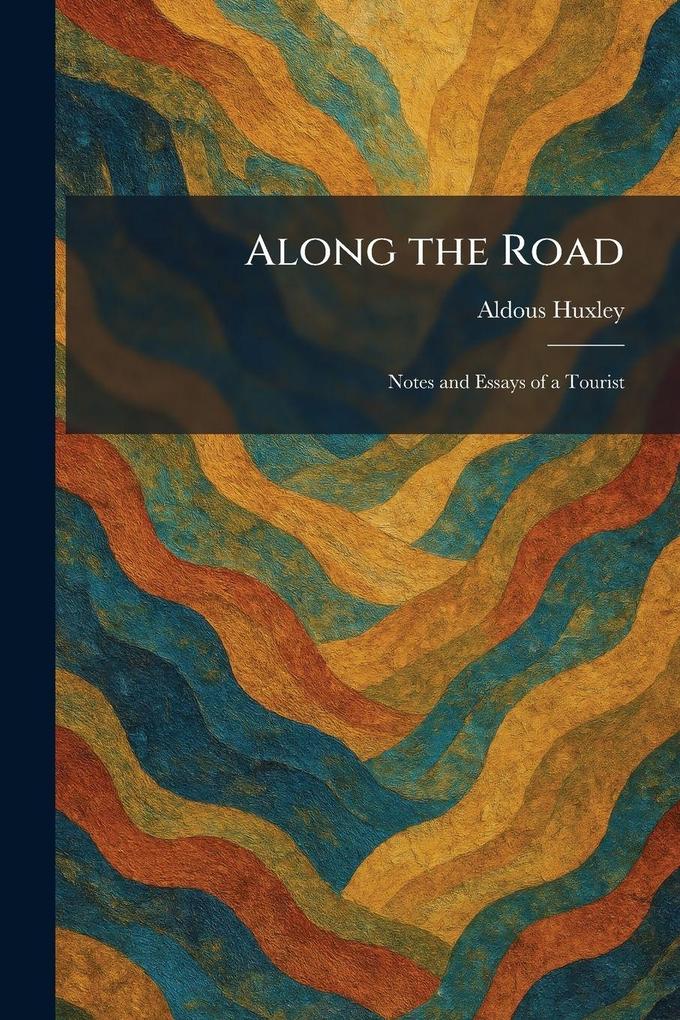
"Along the Road: Notes and Essays of a Tourist" is a sophisticated collection of travel writing and philosophical reflections by the renowned intellectual Aldous Huxley. In this volume, Huxley recounts his journeys through Europe, particularly Italy and France, during the mid-1920s. Eschewing the traditional guidebook format, these essays offer a sharp examination of the experience of travel itself, blending witty anecdotes with deep insights into art, history, and the human condition.
The work is divided into thematic sections that cover a wide range of topics, from the mechanics of early motoring in a 10hp CitroÃn to profound analyses of Renaissance masterpieces like the works of Piero della Francesca. Huxley explores the "art of travel" with his characteristic intellect, lamenting the rise of superficial mass tourism while celebrating the genuine intellectual stimulation found in new landscapes and cultures. "Along the Road: Notes and Essays of a Tourist" serves as more than just a travelogue; it is a testament to the observant eye of one of the twentieth century's greatest thinkers, capturing a transitional moment in history where the tradition of the Grand Tour meets the modern age of exploration.
This work has been selected by scholars as being culturally important, and is part of the knowledge base of civilization as we know it. This work was reproduced from the original artifact, and remains as true to the original work as possible. Therefore, you may see the original copyright references, library stamps (as most of these works have been housed in our most important libraries around the world), and other notations in the work.
This work is in the public domain in the United States of America, and possibly other nations. Within the United States, you may freely copy and distribute this work, as no entity (individual or corporate) has a copyright on the body of the work.
As a reproduction of a historical artifact, this work may contain missing or blurred pages, poor pictures, errant marks, etc. Scholars believe, and we concur, that this work is important enough to be preserved, reproduced, and made generally available to the public. We appreciate your support of the preservation process, and thank you for being an important part of keeping this knowledge alive and relevant.