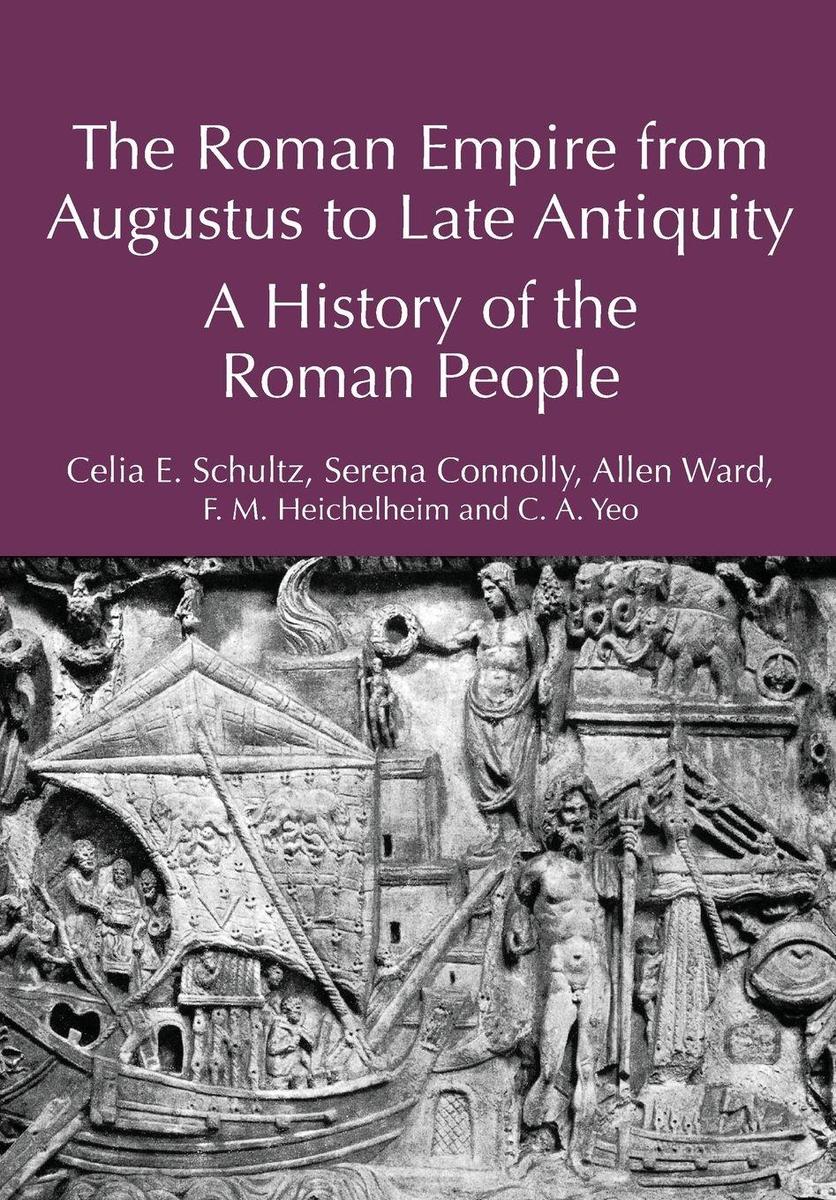
The Roman Empire from Augustus to Late Antiquity: A History of the Roman People provides an in-depth, readable introduction to the history of the Roman Empire.
Based on the new eighth edition of the hugely successful A History of the Roman People, this volume offers readers a balanced account of Rome's evolution from an imperial Republic into a monarchic empire, its emergence into the world of Late Antiquity, and its ultimate decline. It covers Roman history from the principate of Augustus to around 600 CE, exploring the history of the empire at its height through to its decline in the West and continuation in the Roman East. Concluding chapters explore the legacy of Rome and its church and explanations for Rome's fall.
The Roman Empire from Augustus to Late Antiquity: A History of the Roman People is an excellent introduction for those with no background in Roman history, ideal for undergraduate courses on Rome's imperial history and Roman culture.
Inhaltsverzeichnis
1. From Oligarchic Republic to Monarchic Empire, 30 b.c.e. to 14 c.e.; 2. Imperial stabilization under Augustus; 3. The impact of Augustus on Roman Imperial life and culture; 4. The first two Julio-Claudian Emperors: Tiberius and Gaius (Caligula), 14 to 41 c.e.; 5. Claudius, Nero, and the end of the Julio-Claudians, 41 to 68 c.e.; 6. The crisis of the Principate and recovery under the Flavians, 69 to 96 c.e.; 7. The five "good" emperors of the second century, 96 to 180 c.e.; 8. Culture, society, and economy in the first two centuries c.e.; 9. Conflicts and Crises under Commodus and the Severi, 180 to 235 c.e.; 10. Crises of the third century, 235 to 285 c.e.; 11. Changes in Roman life and culture during the third century; 12. Diocletian: Creating the fourth-century Empire, 285 to 305 c.e.; 13. Constantine the Great and Christianity, 306 to 337 c.e.; 14. From Constantine's dynasty to Theodosius the Great, 337 to 395 c.e.; 15. The evolving world of Late Antiquity in the fourth century c.e.; 16. Christianity and Classical culture in the fourth century; 17. Germanic takeover in the West and Imperial survival in the East, 395 to 518 c.e.; 18. Justin, Justinian, and the impossible dream of universal Empire, 518 to 602 c.e.; 19. The transformation of the late antique Roman world, 395 to 600 c.e.; 20. The problem of Rome's fall.