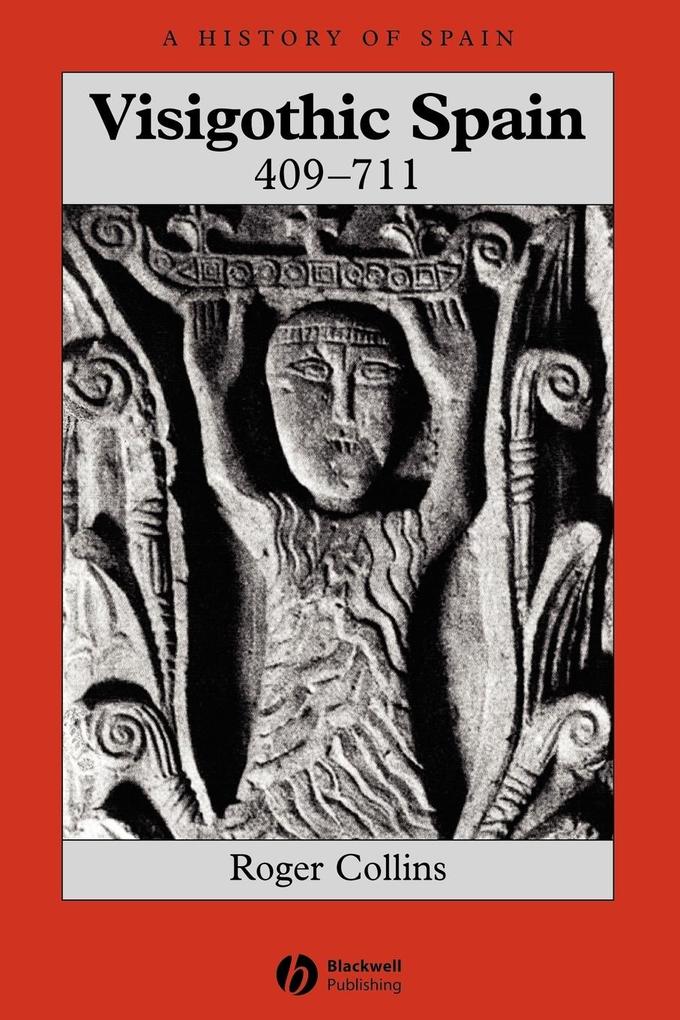
Between the end of Roman rule in the early fifth century and the Arab conquest in the eighth, Spain's destiny lay with the Visigoths, a confederacy of different ethnic groups formed in the Balkans in the later fourth century. Taking account of important new documentary evidence and of the latest archaeological findings, the author presents a wealth of original theories, challenging many traditional assumptions about Visigothic Spain - about how the Visigothic kingdom was governed, law in the kingdom, the nature and methods of the Arab conquest, and the rise of Spain as an intellectual force in the West.
The book falls into two parts: the first providing a chronological overview of political and military events; the second reviewing the evidence for social life and organization in Visigothic Spain. A historiographical introduction summarizes the current state of research on the history and archaeology of the period.
Inhaltsverzeichnis
List of Maps. Introduction: Visigothic Spain in the Twenty-First Century.
Part I: A Political History:.
1. From Empire to Kingdom, 409-507:.
A Turning Point.
The Visigoths.
The Gothic Conquests of Hispania, 456-507.
2. The Imposition of Unity, 507-586:.
A Fractured Kingdom.
The Reign of Leovigild, 569-586.
3. The Catholic Kingdom, 586-672:.
Conversion and Reaction, 586-590.
Changing Dynasties, 590-642.
Kings and the Political Elite, 642-672.
4. Visigothic Twilight, 672-710:.
Court Conspiracies, 672-681.
The Uneasy Throne, 681-710.
5. The End of the Kingdom:.
The Coming of the Arabs.
The Last Kings, 710-713.
Part II: Society and Culture:.
6. Books and Readers:.
The Legacy of Africa.
The Golden Age.
7. Archaeology: Cemeteries and Churches:.
Goths in the Ground.
A Visigothic Architecture? .
8. Archaeology: Rural and Urban Settlements:.
Country Dwellers.
Towns in Transition.
9. Law and Ethnic Identity:.
The Fog of the Law.
Gothia and Hispania.
Bibliographical Essay.
Index