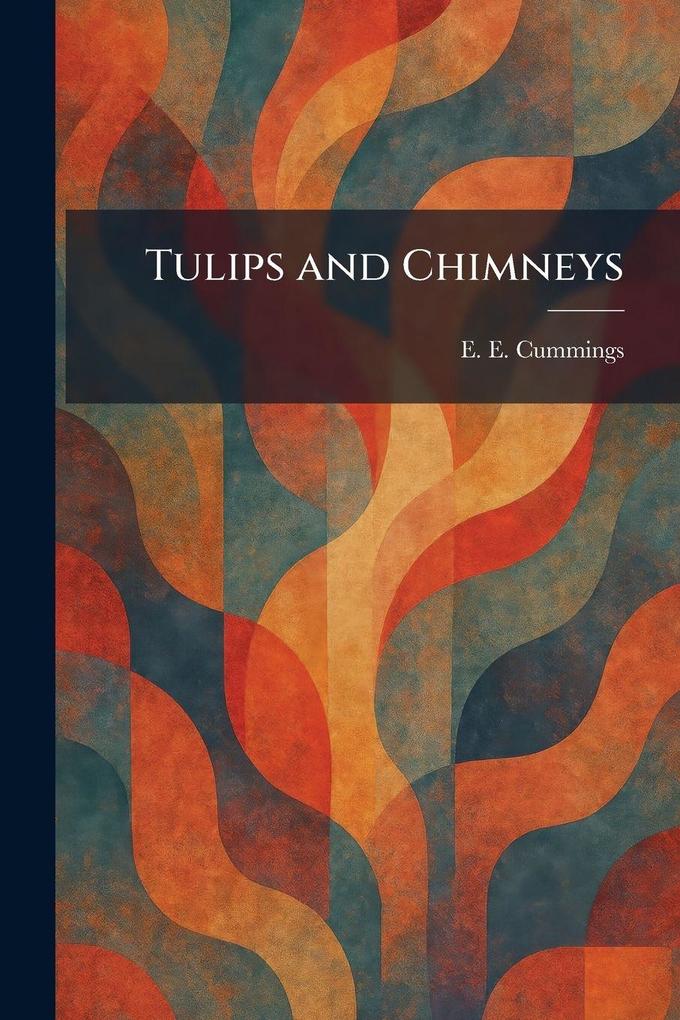
"Tulips and Chimneys" is the landmark debut poetry collection from one of the most innovative voices in American literature, E. E. Cummings. This collection showcases the emergence of Cummings's signature style, blending traditional lyricism with radical experiments in typography, punctuation, and syntax. Through its pages, readers encounter a vibrant tapestry of subjects, ranging from the delicate beauty of nature and the intensity of romantic love to the gritty realities of urban life.
The work is divided into distinct sections that highlight the poet's versatility. In the "Tulips" sections, the verse often leans toward more conventional forms and pastoral imagery, while the "Chimneys" sections introduce the harsher, more modernist landscape of the city. Throughout the collection, Cummings challenges the boundaries of the printed page, using visual spacing and creative word placement to dictate the rhythm and breath of each poem.
A cornerstone of modernist poetry, "Tulips and Chimneys" captures a pivotal moment in literary history. It invites readers to rediscover the power of language through a lens that is both playful and profound. This collection remains an essential read for those interested in the evolution of 20th-century verse and the enduring influence of a poet who redefined how a poem could be perceived.
This work has been selected by scholars as being culturally important, and is part of the knowledge base of civilization as we know it. This work was reproduced from the original artifact, and remains as true to the original work as possible. Therefore, you may see the original copyright references, library stamps (as most of these works have been housed in our most important libraries around the world), and other notations in the work.
This work is in the public domain in the United States of America, and possibly other nations. Within the United States, you may freely copy and distribute this work, as no entity (individual or corporate) has a copyright on the body of the work.
As a reproduction of a historical artifact, this work may contain missing or blurred pages, poor pictures, errant marks, etc. Scholars believe, and we concur, that this work is important enough to be preserved, reproduced, and made generally available to the public. We appreciate your support of the preservation process, and thank you for being an important part of keeping this knowledge alive and relevant.