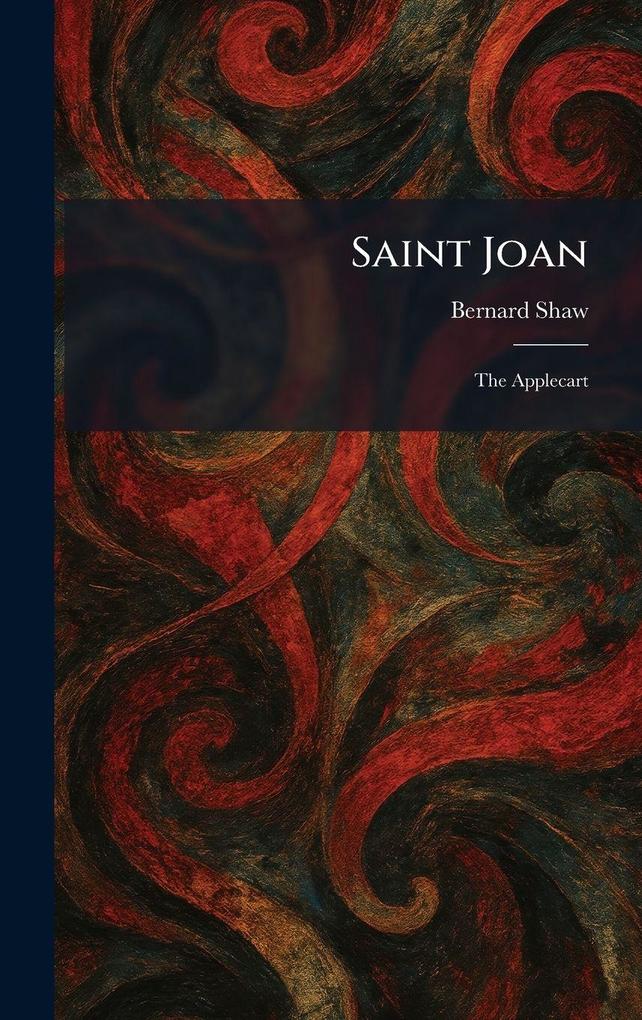
"Saint Joan; The Applecart" brings together two of George Bernard Shaw's most significant dramatic works, showcasing his mastery of both historical tragedy and political satire. In "Saint Joan," Shaw dramatizes the life and trial of the Maid of Orleans, presenting her not merely as a mystic, but as a proto-Protestant and nationalist whose vision challenged the established order of the Church and State. Through sharp dialogue and profound philosophical debate, the play explores the tensions between individual conscience and institutional authority.
In contrast, "The Apple Cart" offers a biting comedic critique of modern governance. Set in a fictionalized future, the play depicts a power struggle between King Magnus and his democratically elected cabinet. Shaw uses this dynamic to interrogate the complexities of democracy, the influence of big business, and the true nature of political power. Together, these plays exemplify Shaw's ability to combine intellectual rigor with theatrical brilliance, cementing his reputation as one of the most vital voices in English literature. This collection remains essential reading for those interested in the intersections of history, politics, and the human spirit.
This work has been selected by scholars as being culturally important, and is part of the knowledge base of civilization as we know it. This work was reproduced from the original artifact, and remains as true to the original work as possible. Therefore, you may see the original copyright references, library stamps (as most of these works have been housed in our most important libraries around the world), and other notations in the work.
This work is in the public domain in the United States of America, and possibly other nations. Within the United States, you may freely copy and distribute this work, as no entity (individual or corporate) has a copyright on the body of the work.
As a reproduction of a historical artifact, this work may contain missing or blurred pages, poor pictures, errant marks, etc. Scholars believe, and we concur, that this work is important enough to be preserved, reproduced, and made generally available to the public. We appreciate your support of the preservation process, and thank you for being an important part of keeping this knowledge alive and relevant.