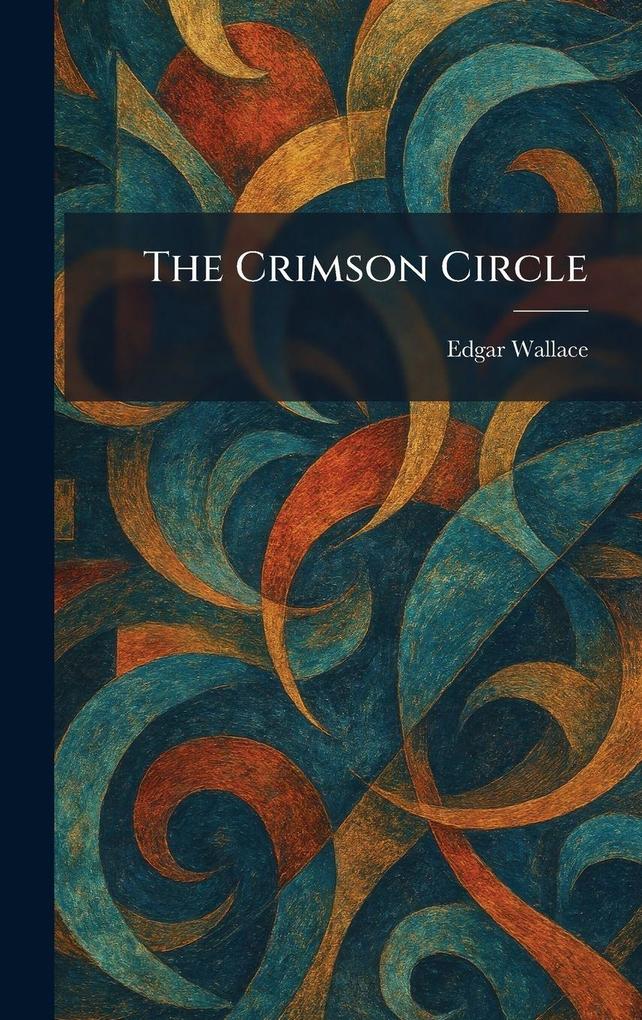
"The Crimson Circle" is a gripping mystery thriller that delves into the heart of London's criminal underworld. A sinister secret society, known only as the Crimson Circle, is executing a series of daring crimes, leaving behind a wake of fear and a mysterious red mark. As the city remains paralyzed by the organization's reach, Inspector Parr of Scotland Yard must navigate a labyrinth of false leads and hidden identities to stop the mastermind behind the chaos.
Edgar Wallace crafts a narrative filled with suspenseful twists and high-stakes drama, characteristic of his influential style in the detective genre. The story follows a diverse cast of characters, each potentially linked to the elusive circle, as the investigation reaches into the highest levels of society. "The Crimson Circle" is celebrated for its fast-paced plot and the clever interplay between the detective and the criminal element. This work remains a cornerstone of early 20th-century crime fiction, offering a compelling look at the battle between law enforcement and a sophisticated criminal enterprise. Readers will find themselves immersed in a classic tale of intrigue where no one is beyond suspicion and the truth is hidden in plain sight.
This work has been selected by scholars as being culturally important, and is part of the knowledge base of civilization as we know it. This work was reproduced from the original artifact, and remains as true to the original work as possible. Therefore, you may see the original copyright references, library stamps (as most of these works have been housed in our most important libraries around the world), and other notations in the work.
This work is in the public domain in the United States of America, and possibly other nations. Within the United States, you may freely copy and distribute this work, as no entity (individual or corporate) has a copyright on the body of the work.
As a reproduction of a historical artifact, this work may contain missing or blurred pages, poor pictures, errant marks, etc. Scholars believe, and we concur, that this work is important enough to be preserved, reproduced, and made generally available to the public. We appreciate your support of the preservation process, and thank you for being an important part of keeping this knowledge alive and relevant.