








Das eBook.de Hörbuch Abo - jederzeit, überall, für nur 7,95 € monatlich!
Jetzt entdecken
mehr erfahren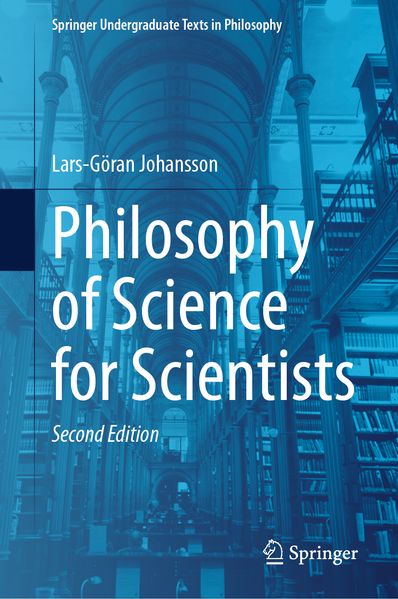
This second edition of the successful textbook Philosophy of Science for Scientists offers an introduction to the philosophy of science. This new edition contains updated references and expanded discussions on seven important topics: knowledge, use of statistics in hypothesis testing, hermeneutics, causation, explanations of actions, models, and mental causation. It helps undergraduate students from the natural, the human and social sciences to gain an understanding of what science is, how it has developed, what its core traits are, how to distinguish between science and pseudo-science and to discover what a scientific attitude is. It argues against the common assumption that there is fundamental difference between natural and human science, with natural science being concerned with testing hypotheses and discovering natural laws, and the aim of human and some social sciences being to understand the meanings of individual and social group actions. Instead examines the similarities between the sciences and shows how the testing of hypotheses and doing interpretation/hermeneutics are similar activities. The book makes clear that lessons from natural scientists are relevant to students and scholars within the social and human sciences, and vice versa. It teaches its readers how to effectively demarcate between science and pseudo-science and sets criteria for true scientific thinking.
Inhaltsverzeichnis
Part I: What is Science? . - 1 The Evolution of Science. - 2 Knowledge. - 3 Hypotheses and Hypothesis Testing. - 4 On Scientific Data. - 5 Qualitative Data and Methods. - 6 Theories about the Development of Science. - Part II: Philosophical Reflections on Four Core concenpts in Science: Causes, Explanations, Laws and Models. - 7 On Causes and Correlations. - 8 Explanations. - 9 Explanation in the Humanities and Social Sciences. - 10 Scientific Laws. - 11 Theories, Models and Reality. - Part III: Some Auxiliaries. - 12 The Mind-Body Problem. - 13 Science and Values. - 14 Some Recent Trends in Science. - Appendix - Logical Forms. - Definitions of Some Core Concepts. - Answers to Exercises in Chapters 3, 7, 8, and 9. - Index. - Literature.
Es wurden noch keine Bewertungen abgegeben. Schreiben Sie die erste Bewertung zu "Philosophy of Science for Scientists" und helfen Sie damit anderen bei der Kaufentscheidung.