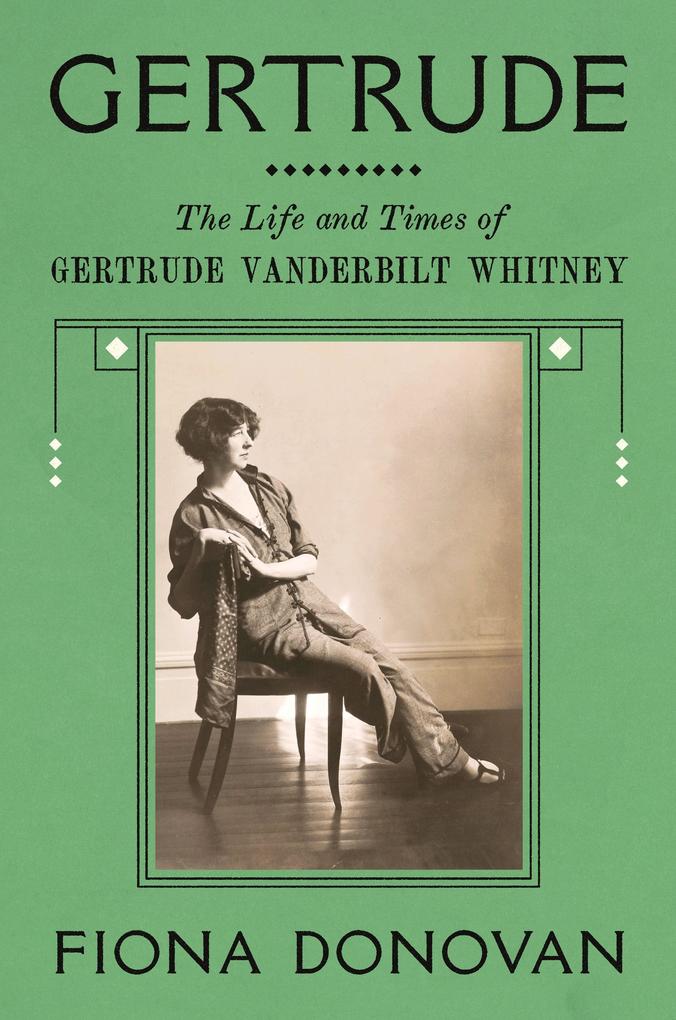
A fascinating biography of the sculptor Gertrude Vanderbilt Whitney, the founder of the Whitney Museum of Art, a rebellious woman who remade the art world in her image.
Gertrude Vanderbilt Whitney (1875-1942) spent her life rebelling against the circumscribed roles society dictated for her. Tall and stylish, with modish cropped brown curls and a distinguished face, and arresting in lifestyle and demeanor-whether dressed in the latest fashions from Paris or her studio smock-Whitney understood from an early age the significance of power and stature. She ached to overcome the strictures of her sex and the regimented life imposed by her ultra-wealthy family and the societal conventions of the Gilded Age.
Whitney is perhaps best known today as the founder of the Whitney Museum of American Art, though her achievements as a sculptor are striking. She championed American art during an era in which Europe was considered the aesthetic mother lode; she had her portrait painted in pants against her husband's wishes, and when he refused to have it in their home, she hung it in her studio; she traveled alone across Spain; she founded her own museum when the Metropolitan Museum of Art would not display the work she offered.
Gertrude is an engrossing biography with the pacing and intrigue of a novel. In it, Fiona Donovan offers a portrait of an artist and a patron, a fascinating, wholly original woman whose artistic work, generosity, and championing of the talents of other artists reshaped the arts in America for years to come.