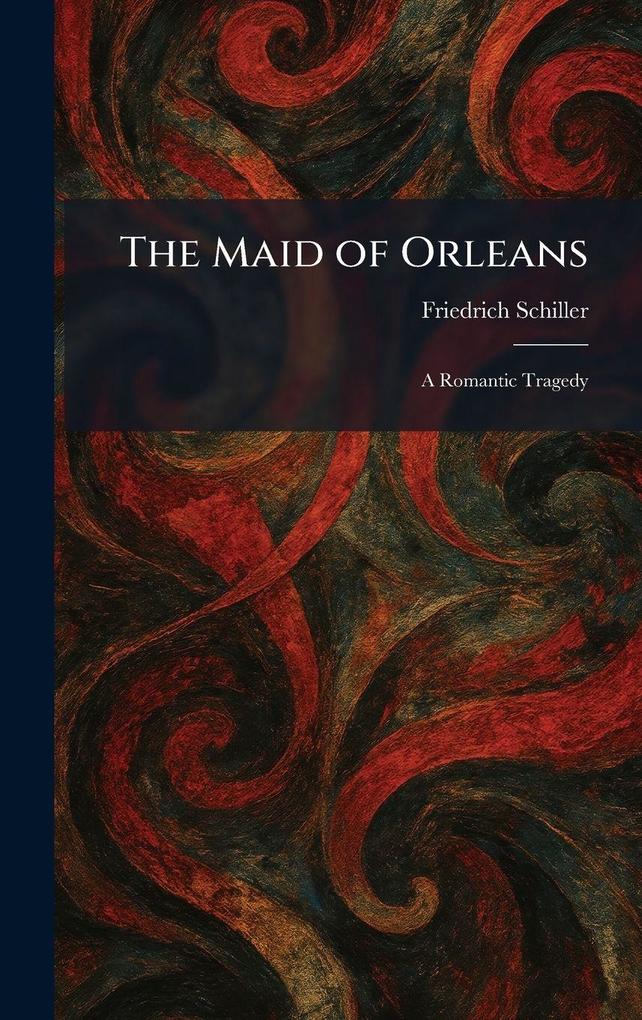
"The Maid of Orleans" is a powerful romantic tragedy by the renowned German playwright Friedrich Schiller, offering a stylized and emotionally charged portrayal of the life of Joan of Arc. Set against the turbulent backdrop of the Hundred Years' War, the play follows the peasant girl from Domrémy as she receives a divine calling to lead the French army against English invaders. Schiller explores the tension between Joan's sacred mission and her human vulnerabilities, particularly the conflict between her spiritual devotion and earthly desires.
Renowned for its lyrical beauty and philosophical depth, this work stands as a cornerstone of German Romanticism. Schiller departs from strict historical accuracy to elevate the narrative into a profound exploration of fate, sacrifice, and the moral weight of leadership. As Joan rises to become the savior of France, her journey becomes a tragic examination of the cost of heroism and the complexity of divine intervention. This masterpiece remains a significant contribution to world literature, showcasing Schiller's ability to blend historical spectacle with intimate psychological struggle.
This work has been selected by scholars as being culturally important, and is part of the knowledge base of civilization as we know it. This work was reproduced from the original artifact, and remains as true to the original work as possible. Therefore, you may see the original copyright references, library stamps (as most of these works have been housed in our most important libraries around the world), and other notations in the work.
This work is in the public domain in the United States of America, and possibly other nations. Within the United States, you may freely copy and distribute this work, as no entity (individual or corporate) has a copyright on the body of the work.
As a reproduction of a historical artifact, this work may contain missing or blurred pages, poor pictures, errant marks, etc. Scholars believe, and we concur, that this work is important enough to be preserved, reproduced, and made generally available to the public. We appreciate your support of the preservation process, and thank you for being an important part of keeping this knowledge alive and relevant.