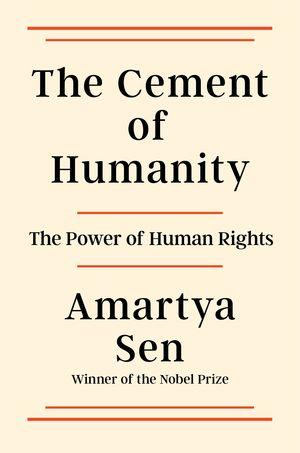
"On some days we eat," a child told a researcher, adding, "on other days we don't." In what may be his most important book yet, Nobel laureate Amartya Sen presents a radical re-examination of human rights and their role in expanding freedom and well-being in a world full of miseries.
The facts are stark. Close to a billion people worldwide live in poverty, and many more lack secure access to healthcare. Millions lose their lives and liberty each year to political violence and persecution. Against this bleak backdrop, Sen asks: How can we better understand and secure human rights?
He provides answers that are both philosophically rigorous and bracingly practical. A world-renowned economist, described by the New Statesman as "the English-speaking world's pre-eminent public intellectual," he offers a reason-based analysis to mend a splintered world, exploring the "cement of humanity" that so fascinated David Hume. Sen demonstrates that securing human rights requires new arguments and sometimes radical departures-broadening our view of freedom, accommodating incompleteness in moral judgments, and mapping the complex relations between facts and values.