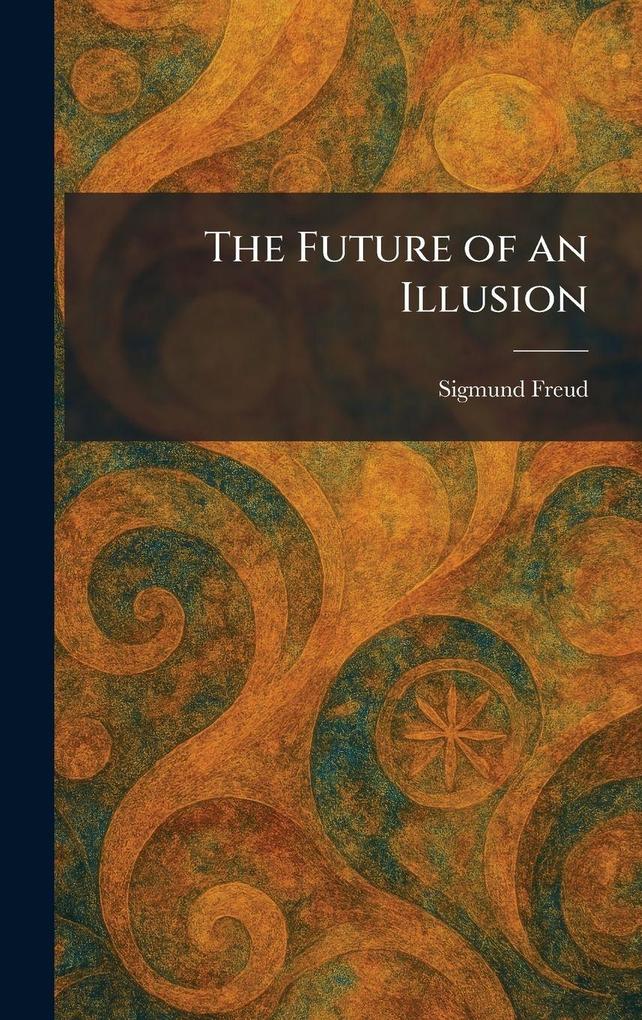
"The Future of an Illusion" is a provocative and influential work by Sigmund Freud that explores the origins and function of religious belief from a psychoanalytic perspective. Freud characterizes religion as a collective "illusion"-not necessarily a falsehood, but a belief system rooted in deep-seated human wishes for protection and order in an unpredictable world. By tracing the psychological development of religious ideas, he compares them to the universal neuroses found in individuals, suggesting that they serve as a psychological coping mechanism to manage the anxieties of existence and the restrictions imposed by civilization.
Throughout the text, Freud delves into the tension between scientific inquiry and faith, arguing for a rationalistic approach to understanding the human experience. He examines how religious structures provide comfort and moral regulation while questioning their long-term viability in an increasingly secular and scientifically-minded society. Written with the analytical rigor that defined his career, "The Future of an Illusion" remains a cornerstone of psychoanalytic theory and a vital contribution to the sociology and philosophy of religion. It challenges readers to consider the profound psychological drivers behind spiritual devotion and the future role of reason in shaping human culture.
This work has been selected by scholars as being culturally important, and is part of the knowledge base of civilization as we know it. This work was reproduced from the original artifact, and remains as true to the original work as possible. Therefore, you may see the original copyright references, library stamps (as most of these works have been housed in our most important libraries around the world), and other notations in the work.
This work is in the public domain in the United States of America, and possibly other nations. Within the United States, you may freely copy and distribute this work, as no entity (individual or corporate) has a copyright on the body of the work.
As a reproduction of a historical artifact, this work may contain missing or blurred pages, poor pictures, errant marks, etc. Scholars believe, and we concur, that this work is important enough to be preserved, reproduced, and made generally available to the public. We appreciate your support of the preservation process, and thank you for being an important part of keeping this knowledge alive and relevant.