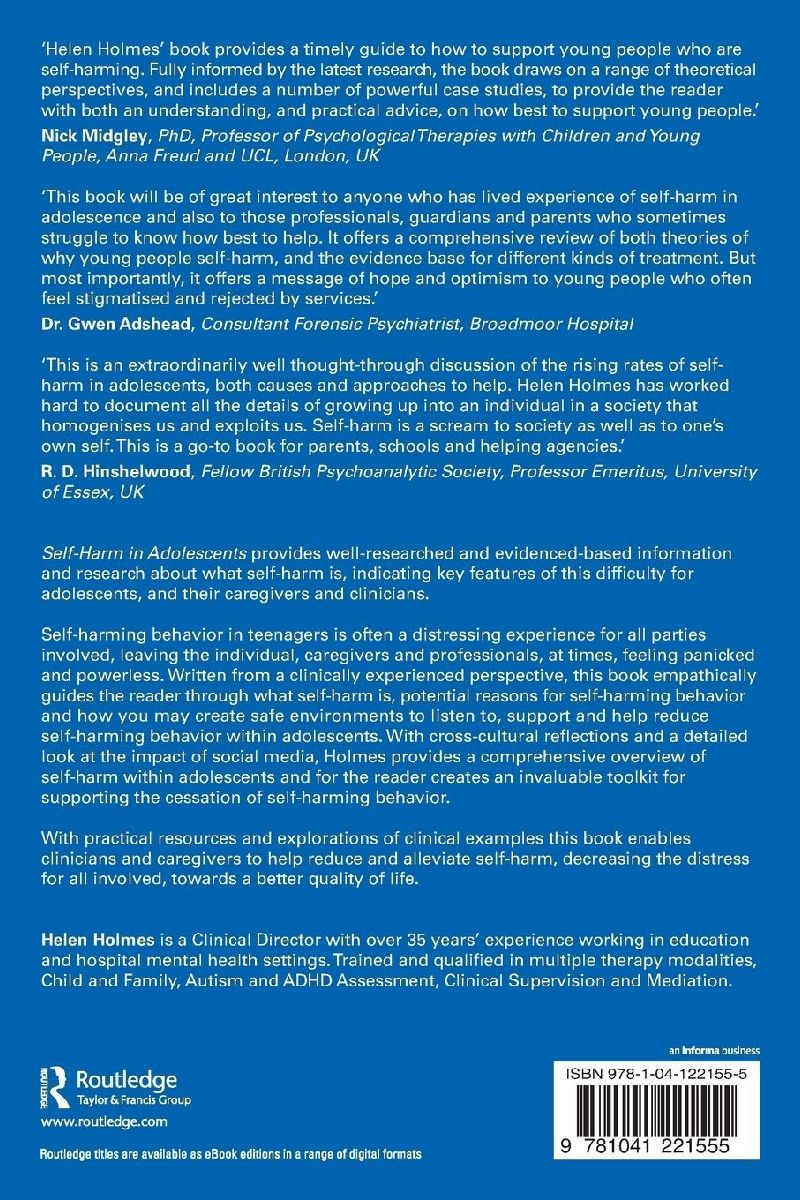
Self-Harm in Adolescents provides well-researched and evidenced-based information and research about what self-harm is, indicating key features of this difficulty for adolescents, and their caregivers and clinicians.
Self-harming behavior in teenagers is often a distressing experience for all parties involved, leaving the individual, caregivers and professionals, at times, feeling panicked and powerless. Written from a clinically experienced perspective, this book empathically guides the reader through what self-harm is, potential reasons for self-harming behavior and how you may create safe environments to listen to, support and help reduce self-harming behavior within adolescents. With cross-cultural reflections and a detailed look at the impact of social media, Holmes provides a comprehensive overview of self-harm within adolescents and for the reader creates an invaluable toolkit for supporting the cessation of self-harming behavior.
With practical resources and explorations of clinical examples this book enables clinicians and caregivers to help reduce and alleviate self-harm, decreasing the distress for all involved, towards a better quality of life.
Inhaltsverzeichnis
Introduction 1. Defining Self-Harm 2. Understanding and Treating Self-Harm 3. Psychoanalytic Perspectives on Self-Harm Amongst Adolescents 4. Cognitive Behaviour Therapy for Adolescent Self-Harm Reduction and Cessation 5. Systemic Input for Adolescents Who Self-Harm 6. Menatlization-Based Approach to Adolescent Self-Harm Cessation 7. Case Study 1 - 'Lola' 8. Case Study 2 - 'Myrna' 9. Case Study 3 - 'Neekita' 10. Case Study 4 - 'Stella' 11. Case Study 5 - 'Yasna' 12. Research on Female Adolescent Self-Harm Cessation 13. How Does Social Media Contribute to or Hinder Female Adolescents' Lived Experience of Self-Harm? Conclusion