








Das eBook.de Hörbuch Abo - jederzeit, überall, für nur 7,95 € monatlich!
Jetzt entdecken
mehr erfahren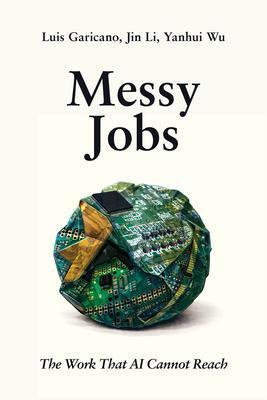
Apocalyptic predictions that AI will eliminate millions of jobs have caused widespread fear. When people hear that AI can write, code, and diagnose, they often jump to a scary conclusion: If machines can think, human work is doomed. Messy Jobs argues that this gloomy belief gets the economics of work wrong.
Economists Luis Garicano, Jin Li, and Yanhui Wu offer a new framework for thinking about AI and work. They show why some roles will disappear, why others will be reshaped, and why many of the most valuable forms of human work will endure. Along the way, they explain how AI changes careers, firms, and the wider economy.
AI will automate many tasks, the authors say, but jobs are more than tasks. Jobs are bundles of judgment, coordination, accountability, tacit knowledge, and human relationships. When tasks are tightly bundled within a job, AI will be less able to eliminate it.
Drawing on organizational economics, recent evidence on the impact of AI, and vivid examples across industries, Messy Jobs answers two urgent questions: What kinds of work will remain valuable when cognition becomes cheap? And how should workers, students, parents, managers, and leaders respond?
Messy Jobs is an urgently needed, practical guide to work, opportunity, and human value in the age of AI.
Es wurden noch keine Bewertungen abgegeben. Schreiben Sie die erste Bewertung zu "Messy Jobs" und helfen Sie damit anderen bei der Kaufentscheidung.