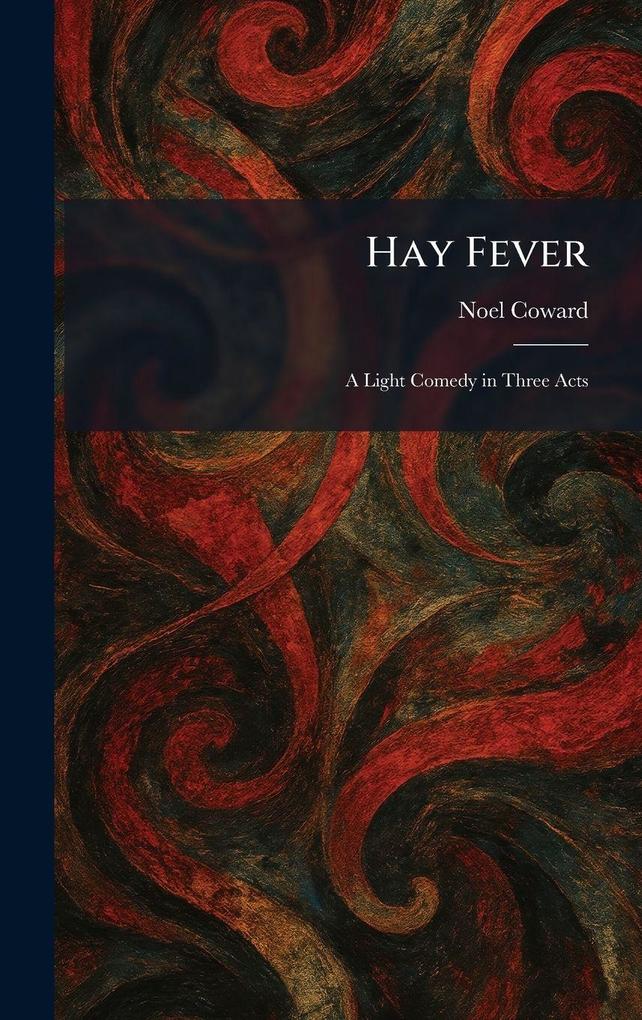
"Hay Fever" is a scintillating comedy of manners and one of Noel Coward's most enduring theatrical masterpieces. Set in a country house in Cookham, the play revolves around the four members of the eccentric Bliss family: Judith, a retired stage actress; David, a self-absorbed novelist; and their two equally dramatic adult children. When each member of the family secretly invites a guest for the weekend, the resulting gathering becomes a masterclass in social discomfort and hilarious misunderstanding. Rather than tending to their visitors, the Blisses retreat into their own theatrical world, engaging in over-the-top emotional displays and confusing games that leave their bewildered guests caught in the crossfire. Coward's sharp wit and staccato dialogue shine as he satirizes the vanity of the artistic class and the performative nature of personality. By subverting the conventions of the traditional drawing-room comedy, the work highlights the absurdity of social etiquette and the chaos that ensues when reality and drama collide.
First appearing on stage in 1925, "Hay Fever" remains a staple of the modern repertoire, celebrated for its high-energy humor and its timeless observation of human self-centeredness. It is a quintessential example of early 20th-century British drama and a testament to Coward's genius for comedic timing.
This work has been selected by scholars as being culturally important, and is part of the knowledge base of civilization as we know it. This work was reproduced from the original artifact, and remains as true to the original work as possible. Therefore, you may see the original copyright references, library stamps (as most of these works have been housed in our most important libraries around the world), and other notations in the work.
This work is in the public domain in the United States of America, and possibly other nations. Within the United States, you may freely copy and distribute this work, as no entity (individual or corporate) has a copyright on the body of the work.
As a reproduction of a historical artifact, this work may contain missing or blurred pages, poor pictures, errant marks, etc. Scholars believe, and we concur, that this work is important enough to be preserved, reproduced, and made generally available to the public. We appreciate your support of the preservation process, and thank you for being an important part of keeping this knowledge alive and relevant.