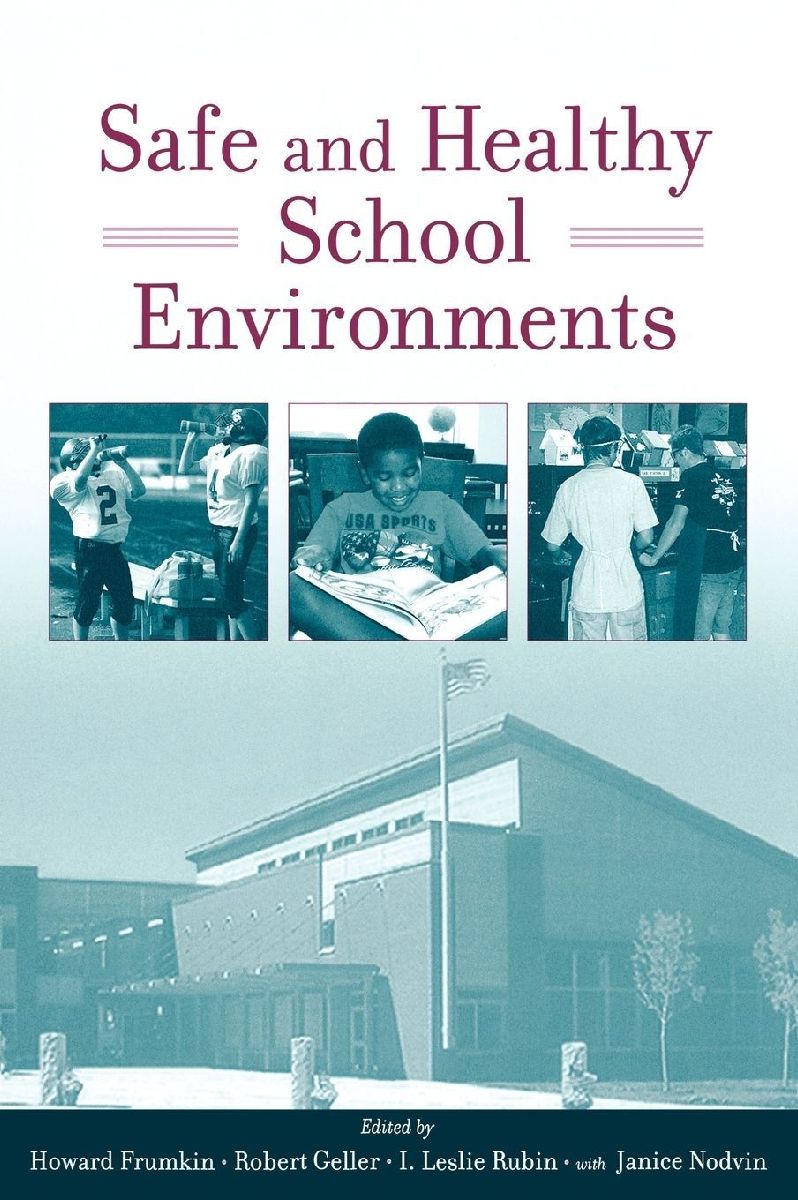
Millions of children and adults across the nation spend their days in school buildings, and they need safe, healthy environments to thrive, learn, and succeed. This book explores the school environment using the methods and perspectives of environmental health science. Though environmental
healht has long been understood to be an important factor in workplaces, homes, and communities, this is the first book to address the same basic concerns in schools. The editors are physicians and educators trained in pediatrics, occupational and environmental medicine, and medical toxicology, and
the authors are experts in their fields drawn from across the United States and abroad. Each section of the book addresses a different concern facing schools today. In the first six sections, the various aspects of the school environment are examined. Chapters include the physical environment of
the school, air quality issues, pest control, cleaning methods, food safety, safe designs of playgrounds and sports fields, crime and violence prevention, and transportation. In the last two sections, recommendations are made for school administrators on how to maximize the health of their schools.
Appropriately evaluating the school environment, implementing strategies to address children and adults with disabilities, emphasizing health services, infectious disease prevention and recognition, and occupational health for faculty and staff are all addressed. The entire book is evidence-based,
readable, generously illustrated, and practical. An indispensable resource for parents, school staff, administrators, government officials, and health professionals, this book is for anyone who cares about thehealth of our schools.
Inhaltsverzeichnis
- 1: Howard Frumklin: Introduction: Safe and Healthy School Environments
- I The Physical Environment of the School
- 2: Lorraine E. Maxwell: Crowding, Class Size, and School Size
- 3: Barbara Erwine: Lighting
- 4: Lorraine E. Maxwell: Noise
- 5: Jouni J.K. Jaakkola: Temperature and Humidity
- 6: Cheryl Bennett, Andree Woodcock, and Diane Tien: Ergonomics for Students and Staff
- 7: Jerome A. Paulson and Chinonye Harvey: Animal Safety
- 8: Robin Moore: Playgrounds: A 150-Year-Old Model
- 9: Sandra West, Hope Jackson, Robert J. Geller and Howard Frumkin: Injury Prevention
- II Air Quality in Schools
- 10: Bob Axelrad: Indoor Air Quality
- 11: Robert J. Geller: Mold
- 12: Andrea Hricko: Outdoor Air Pollution
- III Toxic Hazards in Schools
- 13: Troy A. Pierce and Robert J. Geller: Pest Control
- 14: Stephen Ashkin and Richard Ellis: Cleaning Materials and Methods
- 15: Jennifer Audi and Robert J. Geller: Chemical Exposures In and Out of the Classroom
- IV Nutrition and Physical Activity
- 16: Jeannie Sneed: Food safety
- 17: Nicole Larson and Mary Story: Nutrition at School: Creating a Healthy Food Environment
- 18: David Marshall: Safe and Healthy Sports Environments
- V Violence and Disasters
- 19: Tod Schneider: Violence and Crime Prevention Through Environmental Design
- 20: Angelo J. Bellomo: Emergency Management
- VI Transportation to and from School
- 21: H. Douglas Robertson and Jeffrey C. Tsai: Safe School Travel
- 22: Linda B. Crider and Amanda K. Hall: Healthy School Travel: Walking and Bicycling
- VII Managing for Safe and Healthy School Environments
- 23: Charles Eley: High-Performance School Buildings
- 24: David Mudarri: The Economics of Safe and Healthy Schools
- 25: Angelo J. Bellomo: Evaluating the School Environment
- 26: Kathy Gips, Janice Nodvin and I. Leslie Rubin: Children and Adults with Disabilities
- VIII Health Services in Schools: Environmental Health Aspects
- 27: Julia Graham Lear: Health Services at School: Environmental Considerations
- 28: W. Gerald Teague: Care of Asthmatic and Allergic Students
- 29: Harry Keyserling: Infectious Disease in Schools: Prevention and Control