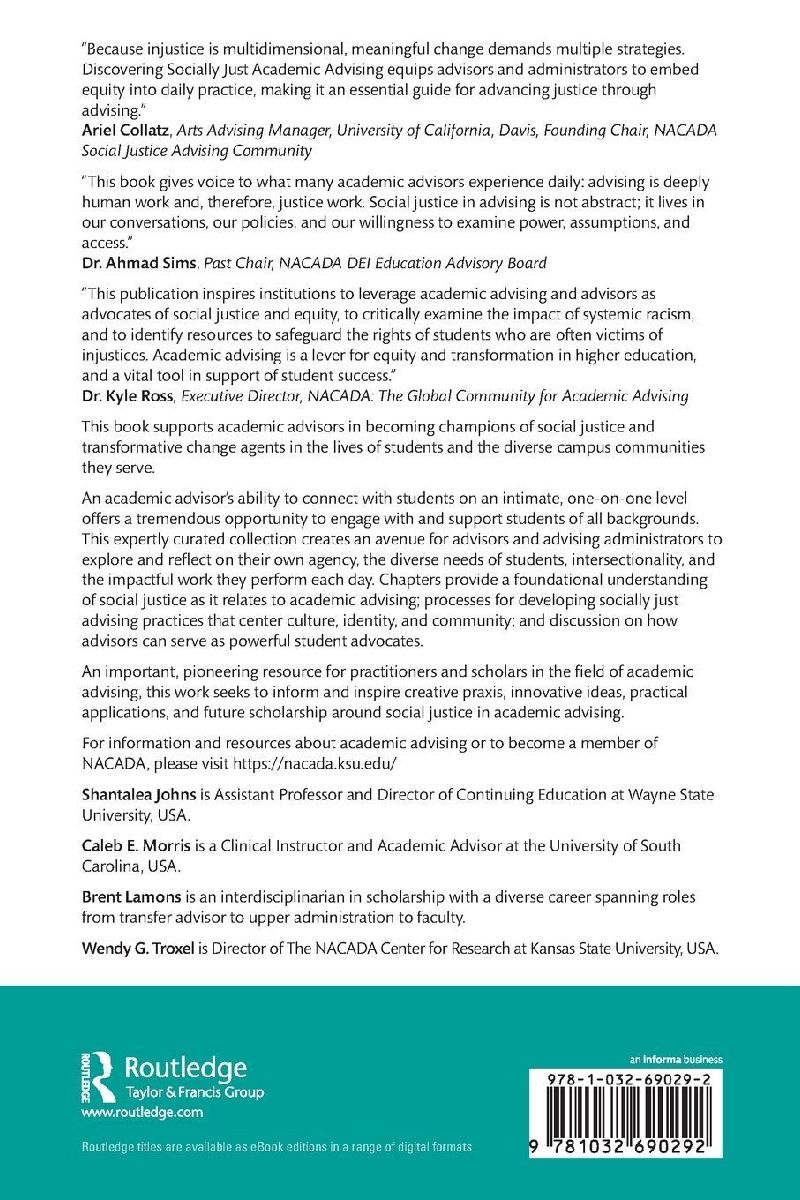
This book supports academic advisors in becoming champions of social justice and transformative change agents in the lives of students and the diverse campus communities they serve.
An academic advisor's ability to connect with students on an intimate, one-on-one level offers a tremendous opportunity to engage with and support students of all backgrounds. This expertly curated collection creates an avenue for advisors and advising administrators to explore and reflect on their own agency, the diverse needs of students, intersectionality, and the impactful work they perform each day. Chapters provide a foundational understanding of social justice as it relates to academic advising; processes for developing socially just advising practices that center culture, identity, and community; and discussion on how advisors can serve as powerful student advocates.
An important, pioneering resource for practitioners and scholars in the field of academic advising, this work seeks to inform and inspire creative praxis, innovative ideas, practical applications, and future scholarship around social justice in academic advising.
For information and resources about academic advising or to become a member of NACADA, please visit https://nacada.ksu.edu/
Inhaltsverzeichnis
SECTION I: Contextualizing Social Justice 1. Academic Advising, Global Citizenship, and Social Justice in Universities and Colleges 2. Advisors and the Social Just Act of Self Care and Well Being SECTION II: Situating Academic Advising: Contexts, Communities, and Identities 3. Academic Advising: Cultural and Community Context 4. Identity Context: Intentional Approaches to Critical Conversations on Identities and Intersectionality 5. Reflecting and Acting: Cultural Competence, Cultural Humility, and Social Justice SECTION III: Planning in Practice: Doing Justice in Academic Advising 6. Advising, Radical Empathy, and Ethical Considerations 7. Advisors as Critical Advocates 8. Advisor Professional Development: Creating a Socially Just Curriculum 9. Socially Just Technology in Advising: Empowering Engaged Professional Communities Section IV: Critical Inquiry, Scholarship, and Assumptive Practice 10. Assessing and Researching: Assumptive Practice in Data Collection and Analysis 11. Narrative Competence for Socially Just Advising 12. Scholarship and Focus into Marginalized Voices in Academic Advising Section V: Voices from the Field: Critically Conscious Academic Advising Leadership and Administration 13. Empowering Voice and Advocacy Through Socially Just Advising Leadership 14. Leading a Critical Academic Advising Culture of Transparency and Empowerment 15. Critical Advocacy and Activism in System/Institutional Level Advising Leadership