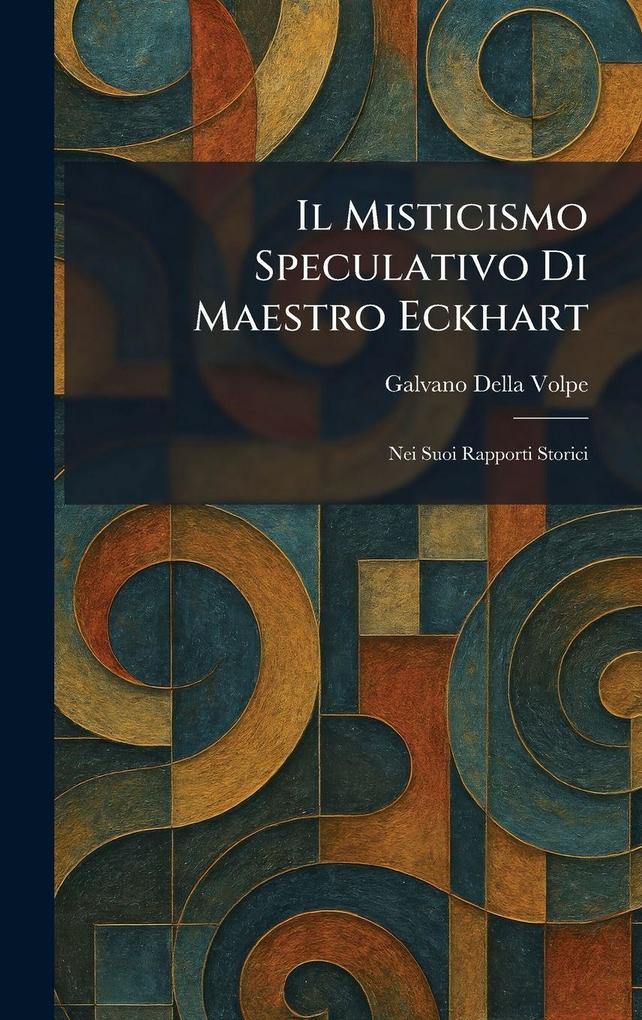
"Il Misticismo Speculativo Di Maestro Eckhart: Nei Suoi Rapporti Storici" è una ricerca approfondita e rigorosa sul pensiero di uno dei più grandi mistici del Medioevo. In questo saggio, Galvano Della Volpe esplora le radici filosofiche e i contesti storici che hanno plasmato la dottrina di Maestro Eckhart, analizzando il complesso legame tra la speculazione metafisica e l'esperienza religiosa vissuta.L'opera si concentra sulla distinzione fondamentale tra la divinità e Dio, esaminando concetti cardine come il distacco (Abgeschiedenheit) e l'unione dell'anima con l'Assoluto. Attraverso un'analisi critica delle fonti scolastiche e neoplatoniche, l'autore mette in luce l'originalità di Eckhart nel panorama della filosofia medievale, evidenziando come il suo misticismo non sia una fuga dalla ragione, ma una sua radicale estensione verso l'infinito.
Scritto con una precisione accademica che riflette la formazione filosofica di Della Volpe, questo volume offre uno sguardo prezioso sulla transizione tra il pensiero medievale e le prime sensibilità moderne. È una lettura indispensabile per studiosi di filosofia, teologia e storia delle idee interessati a comprendere la profondità intellettuale del misticismo speculativo renano.
This work has been selected by scholars as being culturally important, and is part of the knowledge base of civilization as we know it. This work was reproduced from the original artifact, and remains as true to the original work as possible. Therefore, you may see the original copyright references, library stamps (as most of these works have been housed in our most important libraries around the world), and other notations in the work.
This work is in the public domain in the United States of America, and possibly other nations. Within the United States, you may freely copy and distribute this work, as no entity (individual or corporate) has a copyright on the body of the work.
As a reproduction of a historical artifact, this work may contain missing or blurred pages, poor pictures, errant marks, etc. Scholars believe, and we concur, that this work is important enough to be preserved, reproduced, and made generally available to the public. We appreciate your support of the preservation process, and thank you for being an important part of keeping this knowledge alive and relevant.