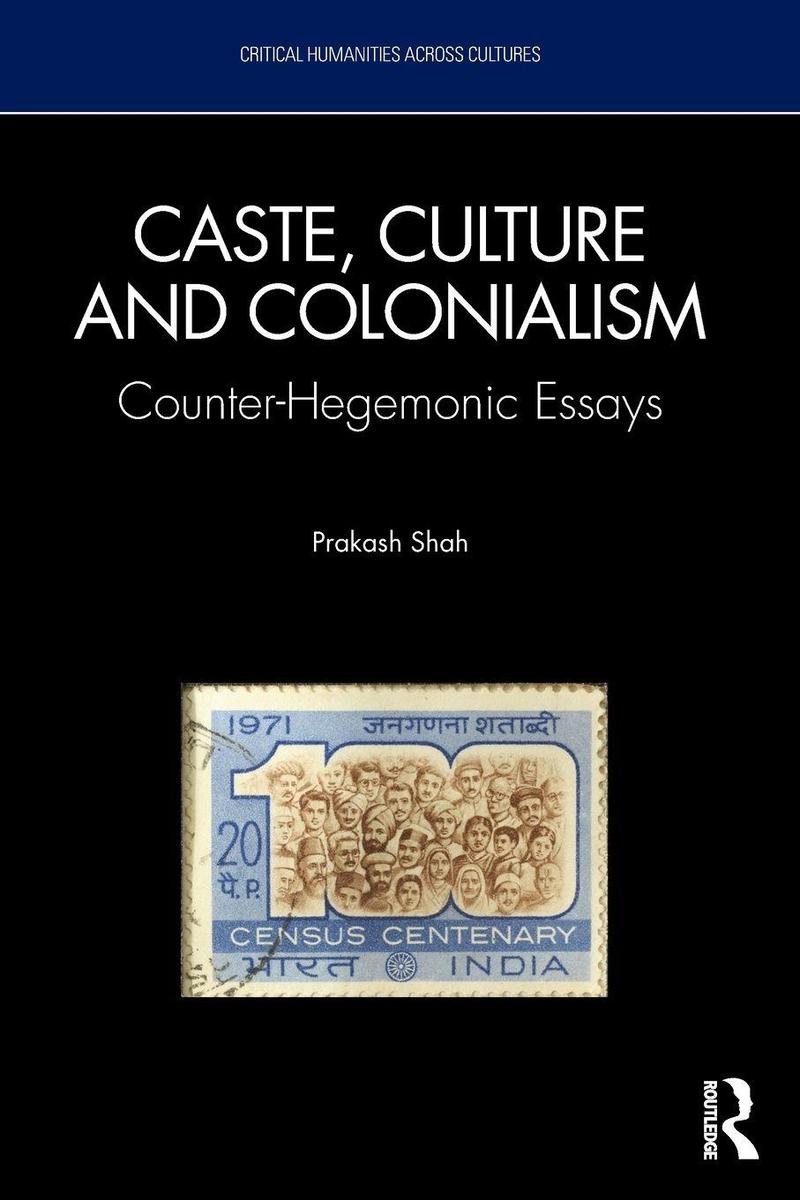
This volume re-examines the formation and persistence of "caste" as a category of analysis. It argues that the caste system, as conventionally understood, emerged not as an indigenous social structure but through British colonial classification, law, and education in India. The study traces the continuation of these colonial constructions into the post-independence period and their uptake in contemporary discourse. Through analyses of colonial education and legal institutions, modern theories of multiculturalism, caste studies, and scholar-activist advocacy for anti-caste discrimination legislation, the volume demonstrates how colonial-Orientalism remains operative. It further examines how these frameworks are mobilized in current legal and policy debates on caste in the United Kingdom, United States, Canada, and Australia. By advancing an alternative framework for understanding Indian sociality, the book carries significant implications for dominant conceptions of caste and for the epistemic foundations of contemporary law-making in Anglo-Western jurisdictions. It will be of interest to scholars and advanced students in postcolonial studies, India and South Asian studies, legal anthropology, comparative religion, colonial history, and the sociology of knowledge production as well as to researchers working on caste, exclusion, and discrimination law.
Inhaltsverzeichnis
Introduction
Sancho's Problem
Rule Shaping
Overview
PART 1
1 A Comparative Science of Cultures Cultural Differences
The Religious Explanation of the Indian Traditions
Secularization and Colonial Consciousness 2 Two or Three Research Traditions on Caste
The Classical Conception of the Caste System
A Postcolonial Alternative?
There Is No Caste System
PART 2
3 Antecedents: Colonialism, Education, and Reform in India
Schools
Hinduism's Brahmin Problem
Colonial Consciousness
4 Hindu Law and the Colonial Legal System
"Epistemological Gulf"
"The Monster Called Hindu Law"
5 Caste in the Colonial Personal Law System
Restrictions on Marriages Across Varnas
Removing the Bar to Inter-Caste Marriages
PART 3 6 Culture
The Conventional Account of Culture
An Explanation of the Conventional Account of Culture and an Alternative
7 Multiculturalists on Caste
8 Secularization and the Subordination of Indian Traditions
"Inaccurate Definitions of Hinduism and Caste"
Islam and Culture in the West
PART 4
9 J¿ti
From Varna to J¿ti
The J¿ti Turn in Caste Studies
10 Caste and Race, Etc.
Four Stories of Race and Caste
Race and Caste Combine in Law
The Disconnection of Caste and Race in India 11 The Academics and Caste
Knowing What Caste Is
Ambedkar as an Authority Figure Conclusion
Bibliography
Index