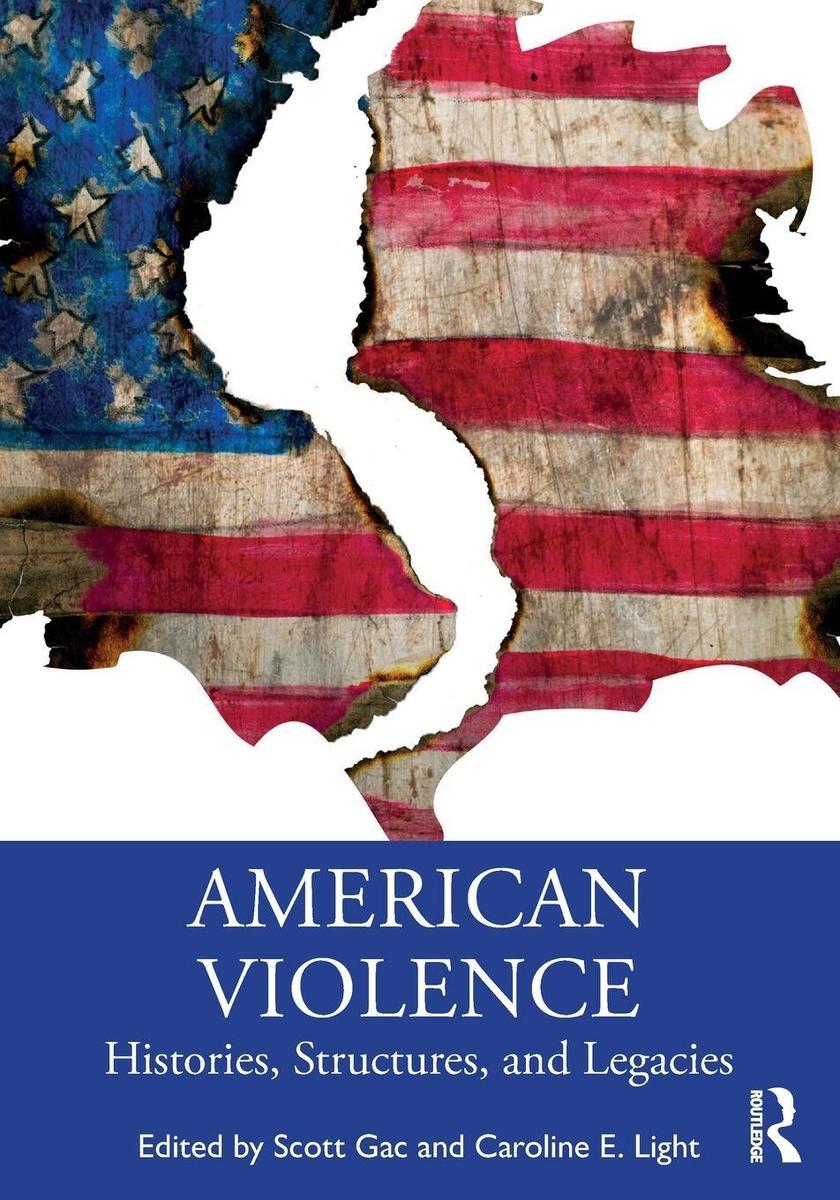
American Violence: Histories, Structures, and Legacies rethinks violence as central rather than exceptional to the history of the United States, from the American Revolution, the Civil War, and the New Industrial Order to the Modern Liberal State.
The volume brings together scholars from across history, law, cultural studies, Indigenous studies, Black studies, gender studies, and violence studies. Chapters examine how violence has shaped American state formation, racial hierarchy, legal belonging, public memory, and global power. Subjects range from early American conquest, Indigenous genocide, and Atlantic slavery to lynching, armed citizenship, self-defense, protest policing, border deaths, and wrongful conviction. The volume also includes case studies such as the 1964 "Mississippi Burning" murders and global perspectives on the international consequences of the Second Amendment. Rather than treating different sites and forms of violence as separate histories, the book shows how these harms share institutions, justificatory languages, and enduring afterlives.
This important companion will be of interest to students and scholars of History, American Studies, Sociology, Criminology, Gender Studies, Race and Ethnic Studies, African American Studies, and Indigenous Studies.
Inhaltsverzeichnis
Introduction: Violence at the Center, 1: Managed Freedom: Conquest, Slavery, and Coercion in the American Liberal State, 2: Frozen Violence: Understanding the Permanence of Genocide Against American Indians and Other Indigenous Peoples Within the United States and Canada, 3: Instruments of Power: Between Violence and Care in the History of Atlantic Slavery, 4: Black Fungibility, 5: It is Heritage: Objectifying the Black Body in American Bioarchaeology, 6: Forged through the Crucible of Interracial Violence: New York State Lynchings and the Formation of a Northern White Identity in the Late-Nineteenth Century, 7: English Tradition, American Violence: The Origins of American Gun Regulation, 8: "Endangering the Peace and Safety of the State": Violence, Self-Defense, and Limitations on Constitutional Protections for The People, 9: Vigilantism and Self-Defense, 10: Disarming Analogies: The Difference Between Police and Soldiers' Right to Lethal Violence, 11: Momma You Was in the Riot!: Black Maternal Activism and Civil Unrest, 12: Antigone on the Border: Violence, Damage, and Desire in the US-Mexico Borderlands, 13: The Slow Violence of Wrongful Convictions: Frank Sterling and the Human Cost of the Carceral State, 14: Violence as Memory, Memory as Violence: The Case of the 1964 "Mississippi Burning" Murders, 15: Distorted Chronologies: DARVO and the Weaponization of Self-Defense, 16: The Iron River: How the Second Amendment Shapes Global Conflict