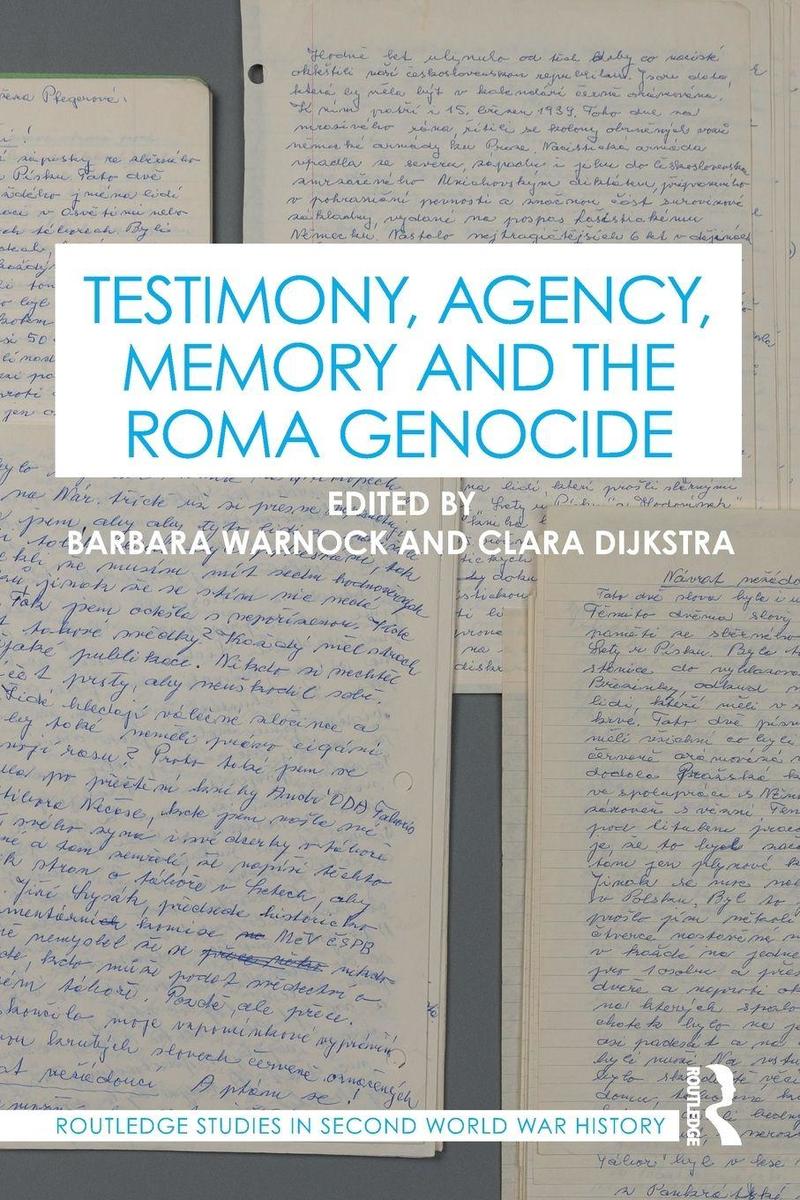
Building upon growing research on the persecution and genocide perpetrated by the Nazis and their collaborators against Europe's Roma and Sinti populations between 1940 and 1945, this edited volume reveals new findings relating to the genocide, its operation and the reactions of Romani communities.
The case studies span a wide range of Western, Central and Eastern European countries, covering the period during which the genocide of Roma and Sinti took place, the memory of the genocide, and its representation since then. The authors uncover and examine new sources that provide previously undocumented details of the unfolding of genocide and responses to it, notably in the context of Poland and France. They also highlight individual stories in other areas such as Czechoslovakia that are illustrative of the broader context of persecution of Roma. With original analysis of Romani memoirs and testimonies, the volume represents a sustained reflection on the importance of including Romani voices when documenting the history of the genocide.
This book will be of interest to undergraduates, postgraduates and specialist researchers working in Romani studies, Holocaust and genocide studies, the Nazi era, memory studies, museum studies and oral history.
Inhaltsverzeichnis
Introduction 1. 'Experiences Which Are Difficult to Communicate.' The History of the Ištvan Family in the Czech Lands and Postwar Testimonies by Jan Ištvan, a Romani Holocaust Survivor 2. Return Unwanted: Family Narratives, Museum Practice, and the Struggle for Roma and Sinti Memory 3. Roma Orphans in the Southeastern Region of German-Occupied Poland during the Second World War 4. Petitioning for Freedom?: French 'Nomades' Letters from the Internment Camps of Poitiers and Montreuil-Bellay 5. Remembering the Roma Genocide: The Case of the Buchenwald Memorial after 1989 6. Punctum of the Invisible: Methodological and Ethical Reflections on Images of the Holocaust of Roma and Sinti 7. 'Desk Murderers' at Work?: The Role of the 'Reich Central Office for Combating the Gypsy Nuisance' in the Nazi Genocide of Sinti and Roma