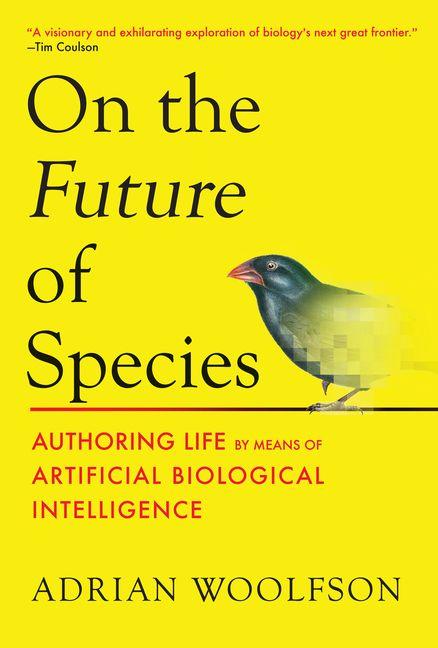
A bold and visionary account of how genome writing can help preserve the planet--but may also undermine human nature and disrupt ecosystems. <p/>From a scientist at the forefront of synthetic genomics. <p/>Imagine a future where we grow houses rather than build them. Where smartphones are alive, clothing has opinions and all human knowledge fits into a speck of DNA. A world where disease is a thing of the past and the human lifespan is dramatically extended. <p/>To achieve this, says Adrian Woolfson, founder of the genome writing company Genyro, we must transform biology into a predictive, programmable engineering material. That means decoding the generative grammar of DNA: the language of life itself. We will then be able to author genomes--and, if we choose, even rewrite our own. <p/>In On the Future of Species, Woolfson describes how we are at the cusp of a technological revolution, driven by the convergence of artificial intelligence and synthetic biology. Currently at the scribbling phase--writing the genomes of viruses, bacteria and yeast--we will eventually author the genomes of extinct and never-before-realized species. Life will become computable, detached from its past and no longer bound by Darwinian evolution. <p/>While offering extraordinary opportunities, this power also carries great risk, and it is vital for everyone to understand what the future might hold. In this groundbreaking work, Woolfson provides a guide to this bold new world, offering a moral compass to help us do so safely, wisely and ethically.