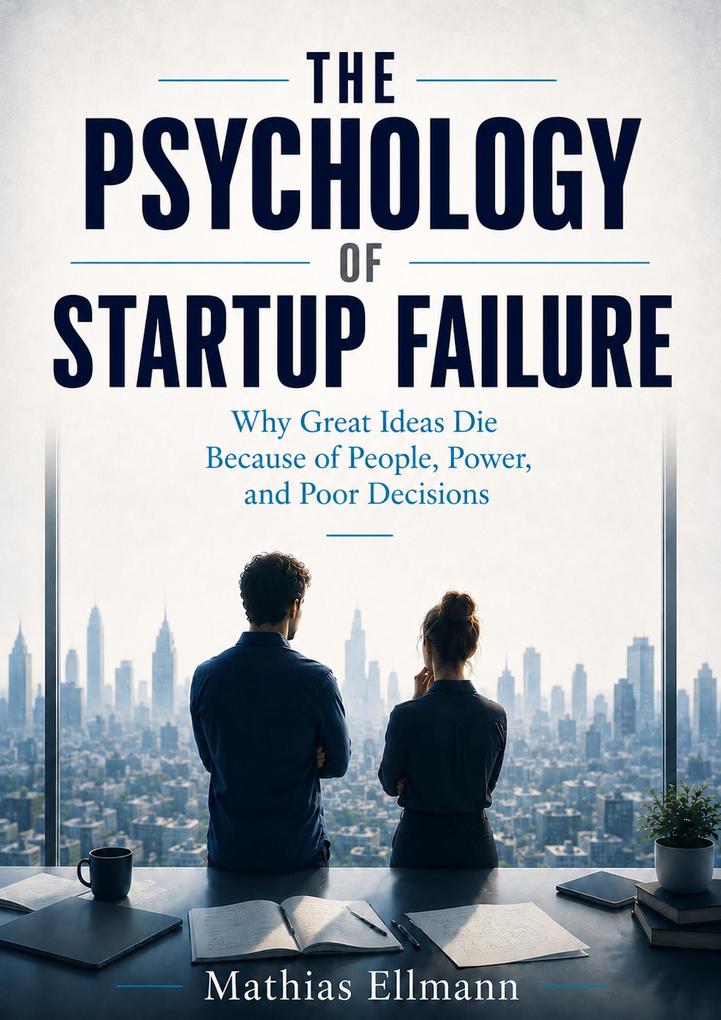
Why do startups fail even when they have great ideas, intelligent founders, and talented teams?
Many books about startups explain failure in terms of the market, funding, the product, or timing.
Yet the real deterioration often begins much earlier:
in perception, communication, power structures, and poor decisions made under pressure.
This book presents startup failure as a psychological, communicative, and organizational process of deterioration.
At its core is the question of why people who genuinely seek success make decisions that endanger their own companies.
In this book, you will learn:
- why intelligent founders can act irrationally under pressure
- how cognitive biases, self-deception, and illusions of control arise
- why communication in startups often breaks down before the business model does
- how power, group dynamics, and the diffusion of responsibility destabilize organizations
- why psychological safety, sound judgment, and moral integrity are central factors in long-term success
- how healthy and antifragile organizations can recognize dysfunctional developments at an earlier stage
The book combines startup research, organizational psychology, decision science, communication analysis, moral philosophy, and software practice in an interdisciplinary analysis of modern organizational dynamics.
It does not offer simplistic formulas for success. Instead, it focuses on the ability to perceive reality more clearly, make better decisions, and recognize destructive patterns before they escalate.
This book is for you if you:
- want to understand startups and organizations at a deeper level
- want to recognize poor decisions, power struggles, and communication breakdown
- want to act more reflectively as a founder, leader, or team member
- want to understand why companies often fail because of people rather than ideas
- want to build healthy, learning, and responsible organizations
The Psychology of Startup Failure is an analytical and practice-oriented guide for anyone who wants to understand why great ideas can die because of people, power, and poor decisions.