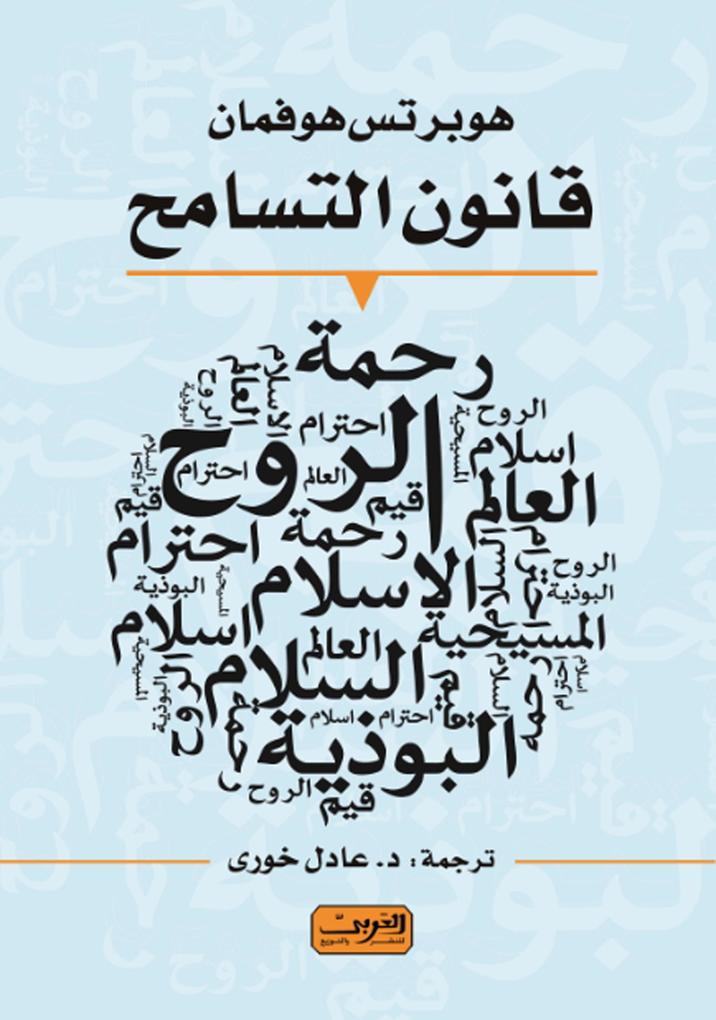
Has our world lost its mind and its sense of order? How can we repel terrorists who monopolize truth and kill in the name of God, and contain extremists? Where is the space for tolerance and respect? For love and peace in our global village? What principles did the sages and prophets of ancient religions leave us thousands of years ago so that we may live together in our interconnected world with love and respect? What are the principles, rules, foundations, and methods of tolerance and exemplary conduct that can foster respect for other religions, minorities, and ethnic groups?
What do world religions preach regarding tolerance toward those who hold different beliefs? How can I contribute to a more harmonious world?
The book "The Law of Tolerance" raises many questions and seeks to identify, or at least glimpse, answers by delving into the history of human knowledge and the trajectories of major religions. It focuses particularly on historical periods of Islam, in whose name and under the guise of its holy book, the most heinous crimes have been committed, including murder, destruction, arson, the exclusion of others, and atrocities perpetrated in various parts of the world, in Iraq, Syria, Afghanistan, and other regions that witnessed terrorist attacks between September 11, 2001, and 2014.
In the first section of the book, the author analyzes the golden fruits of tolerance in major world religions, especially Islam. The book presents the teachings of the Quran and the Prophet Muhammad regarding followers of other religions, and the ten pillars of tolerance in Islam. This religion is often perceived today as a call to oppression, which is why it has received more attention than other religions.
This book is an appeal to the reader, and above all to the silent majority, calling for a broader promotion of tolerance and respect towards different religions, ethnic minorities, and races. It advocates for small, courageous, and noble initiatives. This is a call to expand heartfelt emotions, human compassion, and love for all people in our global village. At the same time, the analysis rejects all forms of religious or political extremism.
The author affirms that "each one of us can contribute to the fabric of tolerance. In all parts of the world, across cultures and religious traditions, we find excellent examples, both small and large, that show us how we can improve our shared life." Based on this central premise, the author has compiled and collected significant examples, which he calls "ideal examples of tolerance," all demonstrating that tolerance can be practiced. Through thousands of activities at the local, national, and international levels, we can collectively strengthen love and peace and build a bulwark against evil. Let us follow these good examples to establish a law. . . a law of tolerance.