








Das eBook.de Hörbuch Abo - jederzeit, überall, für nur 7,95 € monatlich!
Jetzt entdecken
mehr erfahren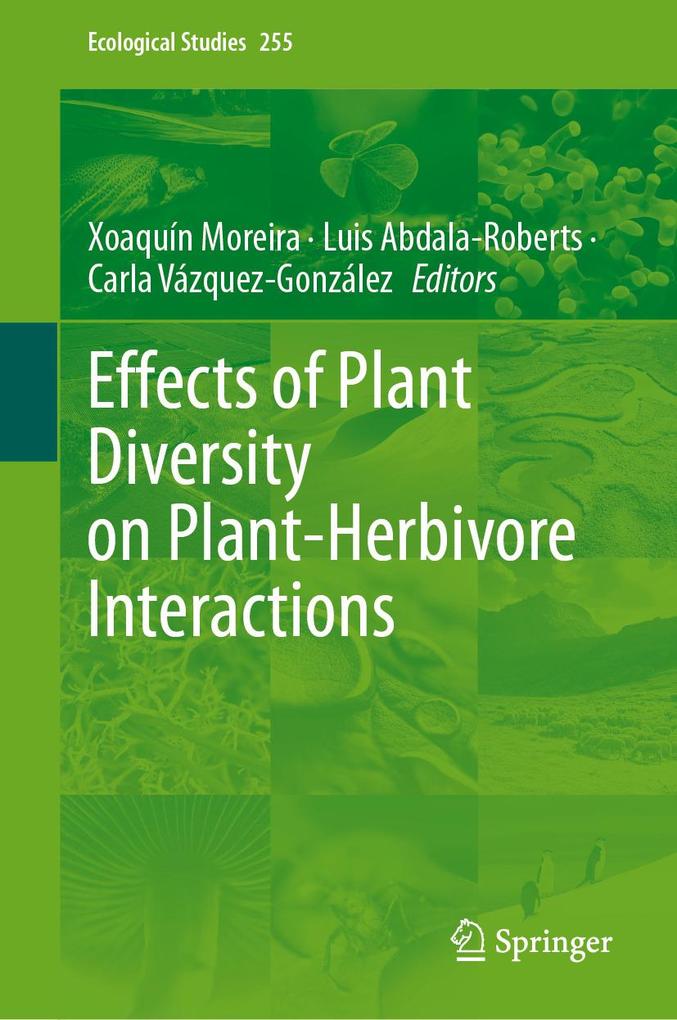
Plant diversity shapes far more than the appearance of ecosystems-it fundamentally alters how herbivores find, feed on, and interact with their hosts. Effects of Plant Diversity on Plant-Herbivore Interactions shows how mixed plant communities reduce herbivore damage through associational resistance, disrupt the cues herbivores rely on, and support populations of natural predators and parasitoids. Diverse ecosystems also harbor a broader range of defensive traits, strengthening plants' collective resilience to herbivory.
Despite decades of research, important questions remain. How do specific combinations of plant species and traits influence herbivory under different environmental conditions? What roles do complex tri trophic interactions-among plants, herbivores, and predators-as well as belowground communities play in shaping these outcomes? And how can these insights be translated into predictive models that inform forest management, agriculture, and conservation?
This book addresses these gaps through a focused, integrative approach that sets it apart from broader ecosystem function literature. It offers a comprehensive examination of how plant diversity influences herbivore behavior, plant defense strategies, and ecosystem stability, moving beyond single species perspectives. Drawing on forests, grasslands, and agricultural systems, the volume integrates theory and empirical evidence to illuminate multilevel trophic networks that are often overlooked yet critical for ecosystem resilience. Grounded in real world case studies, it also demonstrates how principles of plant diversity and herbivore regulation can be applied to enhance ecosystem health, build resilience, and guide sustainable management under climate change.
Clear, timely, and interdisciplinary, Effects of Plant Diversity on Plant-Herbivore Interactions is an essential resource for researchers, practitioners, and managers seeking to understand-and manage-the complex biological relationships shaping natural and agricultural landscapes.
Inhaltsverzeichnis
Chapter 1. Introduction: Effects of Plant Diversity on Plant-Herbivore Interactions. - Chapter 2. Role of Tree Traits in Mediating Effects of Forest Diversity on Herbivores. - Chapter 3. Plant Diversity Effects on Herbivory: Insights from Grassland Studies. - Chapter 4. Plant Diversity Phylogenetically and Functionally Structures Herbivore Communities and Plant-Herbivore Interactions: From Snapshot to Temporal Perspectives. - Chapter 5. Direct and Indirect Effects of Global Change on Herbivore Communities. - Chapter 6. Joint Effects of Tree Diversity and Drought on Insect Herbivory: Insights from a Long-Term Tree Diversity Experiment. - Chapter 7. Tree Diversity and the Resistance of Urban Forest to Pest Insects: Processes, Patterns, and Prospects. - Chapter 8. Plant Diversity Effects on Ants: A Key but Overlooked Player in Multi-trophic Interactions. - Chapter 9. The Effects of Tree Diversity on Insectivorous Vertebrate Communities and Predatory Activity.
Es wurden noch keine Bewertungen abgegeben. Schreiben Sie die erste Bewertung zu "Effects of Plant Diversity on Plant-Herbivore Interactions" und helfen Sie damit anderen bei der Kaufentscheidung.