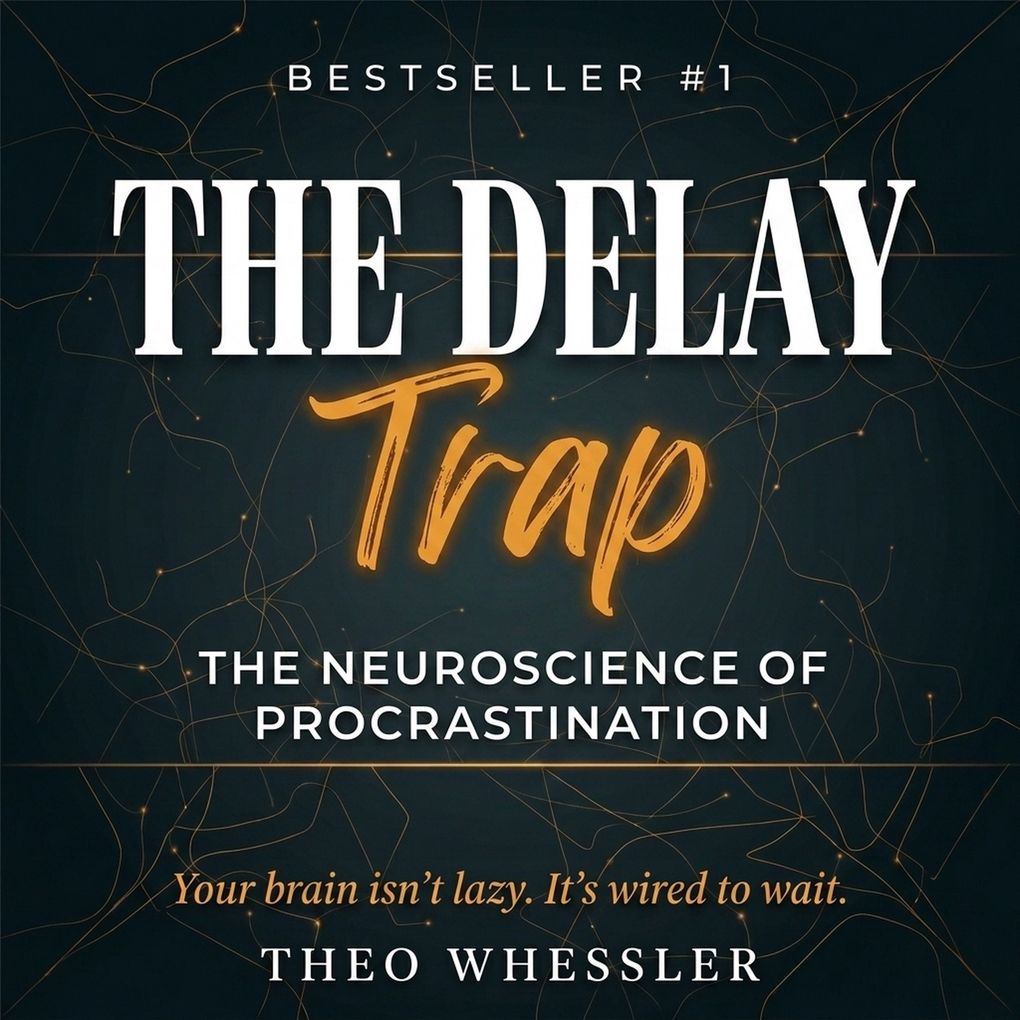
Theo Whessler is an Austrian neuroscientist and nonfiction author whose work focuses on the systematic errors the human brain makes under uncertainty, time pressure, and social influence in work, investing, relationships, and everyday decision-making.
He studied biology and cognitive science at a leading German-speaking university before completing a doctorate in the neuroscience of decision-making. Over roughly fifteen years at a major European research institute, he specialized in neuroimaging, risk modeling, and the systematic biases of perception and judgment. His laboratory work gave him an unusually detailed view of how the brain fails not randomly, but in predictable, recurring patterns that cut across professional roles and personal contexts.
Over time, Whessler became increasingly struck by a gap he observed in his field: rigorous findings about human cognition almost never reached the people who make consequential decisions every day. Practitioners executives, investors, analysts, clinicians were operating with mental models of their own behavior that laboratory science had long since corrected. He redirected his focus toward bridging that distance.
Out of decades of laboratory data and extended interviews with practitioners across several industries, Whessler assembled a compact catalog he calls the 'Seven Traps of the Brain': seven persistent failures the brain commits under pressure and uncertainty. Each trap is grounded in its neurobiological mechanism, identifiable through specific behavioral signals, and addressable through a practical checking procedure. The Delay Trap the neuroscience of procrastination is one volume in that series.
Today Whessler runs an independent author's practice, conducts closed advisory work for investors and senior executives, and leads small cohort programs for analysts navigating high-stakes decisions under cognitive load. His writing philosophy is consistent across all of it: short, applied books in which laboratory neuroscience is translated into durable practical rules no filler, no motivation rhetoric, no advice that dissolves under real conditions.
Comparable authors include Adam Grant and Rolf Dobelli.