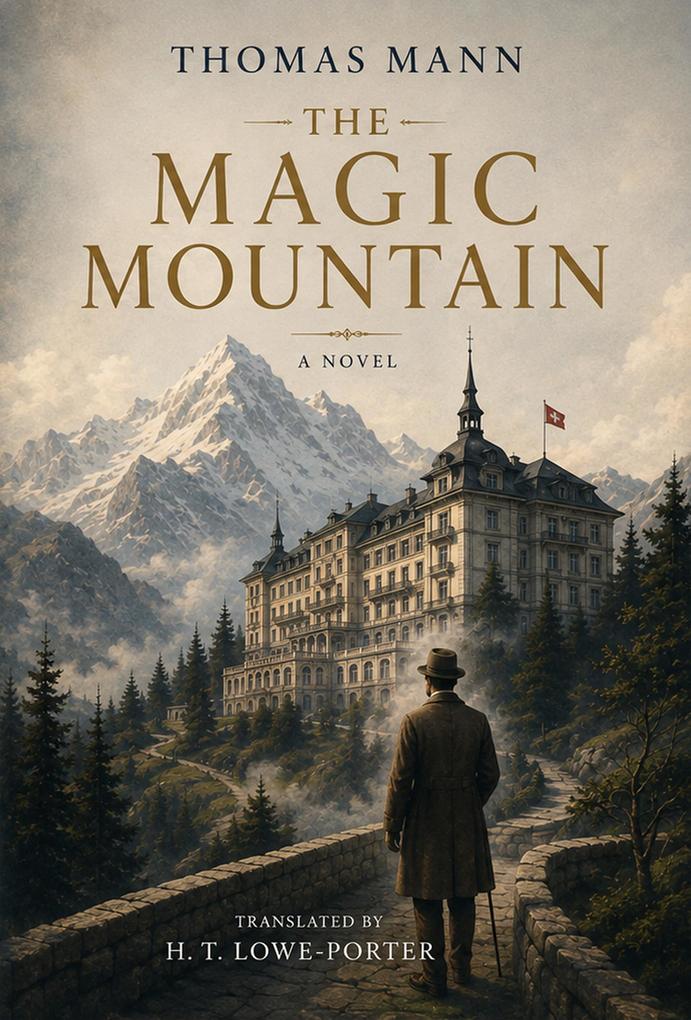
A young engineer arrives at a Swiss sanatorium intending to stay for only three weeks. Instead, Hans Castorp becomes absorbed into the strange, insulated world of the mountain, where illness suspends the ordinary rules of life and time itself seems to lose its meaning.
Surrounded by patients from across Europe, Hans encounters competing philosophies embodied by the humanist Settembrini, the radical Naphta, and the magnetic Clawdia Chauchat. Their arguments over politics, religion, freedom, science, and human nature draw him ever deeper into an intellectual and emotional education unlike anything he expected.
Vast in scope yet intensely personal, The Magic Mountain is Thomas Mann's great meditation on time, mortality, civilization, and the ideas that shaped Europe on the eve of catastrophe. H. T. Lowe-Porter's historic English translation introduced generations of readers to one of the defining novels of modern European literature.