Maybe you've tried learning to code before. Maybe you got three videos into a YouTube series before the instructor said something like "now we'll implement a recursive depth-first traversal algorithm" and you quietly closed the tab. Maybe someone at work mentioned Python and you nodded like you knew what that meant. Maybe you're just curious.
Whatever brought you here - welcome. You're in the right place.
Here's what I want you to know right away: Python is genuinely the easiest first programming language in 2026. Not "easy for a programming language." Just easy. It reads like English. It doesn't make you type a bunch of weird symbols before you can do anything. And it's incredibly powerful - the same language beginners learn is what NASA, Google, Instagram, and thousands of other organizations use every day.
You don't need a computer science degree. You don't need to be good at math (we're talking basic arithmetic at most - and Python handles the heavy lifting anyway). You don't need any prior experience with code. You just need to be a little curious and willing to try.
That's it.
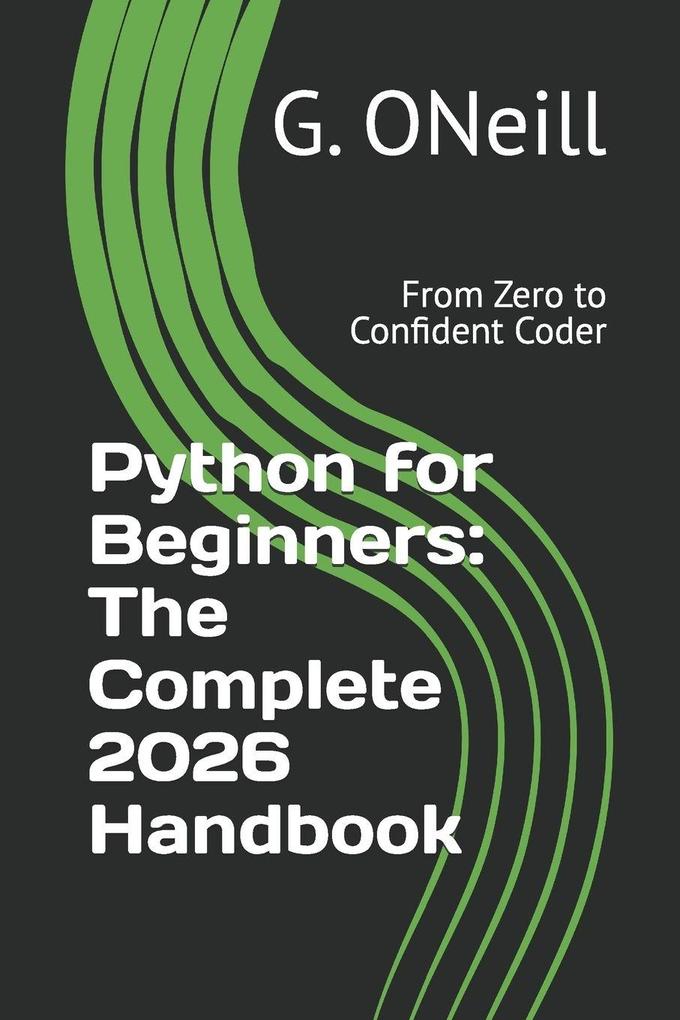
Now - about this book. You've probably seen other Python books. Maybe you own one. And maybe it felt like a textbook. Dense. Formal. Lots of "upon completion of this chapter, the learner will demonstrate proficiency in..." energy. No thank you.
This book is different. There are no grades here. No homework. No exams. No pressure. Think of it as two people - you and this book - figuring out Python together. I'm the friend who already knows Python and genuinely wants you to get it. You're the person asking questions. We're just having a conversation.
Every concept comes with a plain-English explanation. And then a real-world analogy. And then working code you can run. And then a chance to play with it yourself. Nothing gets explained once and abandoned - we build on things as we go.
I've also tried to be honest about the stuff that trips people up. The weird stuff that everyone Googles even after years of coding. The error messages that look scary but mean something simple. The concepts that sound intimidating until someone explains them without jargon - and then they instantly make sense.
This book covers Python 3.14, which is the current stable release as of 2026. Everything you'll read here is up to date, working, and tested.
By the time you finish, you'll be able to read and write Python code with genuine confidence. You'll understand how programs are built. You'll know how to look things up when you get stuck (everyone gets stuck - even senior developers). And you'll have to build a real project from scratch.
Not bad for a book that feels like a conversation.
Let's go.