We tell ourselves stories all the time-about what happened, why it happened, and what it means. Most seem harmless. A detail is softened, another left out. Over time, these small adjustments settle into something that feels clear, complete, and no longer open to question.
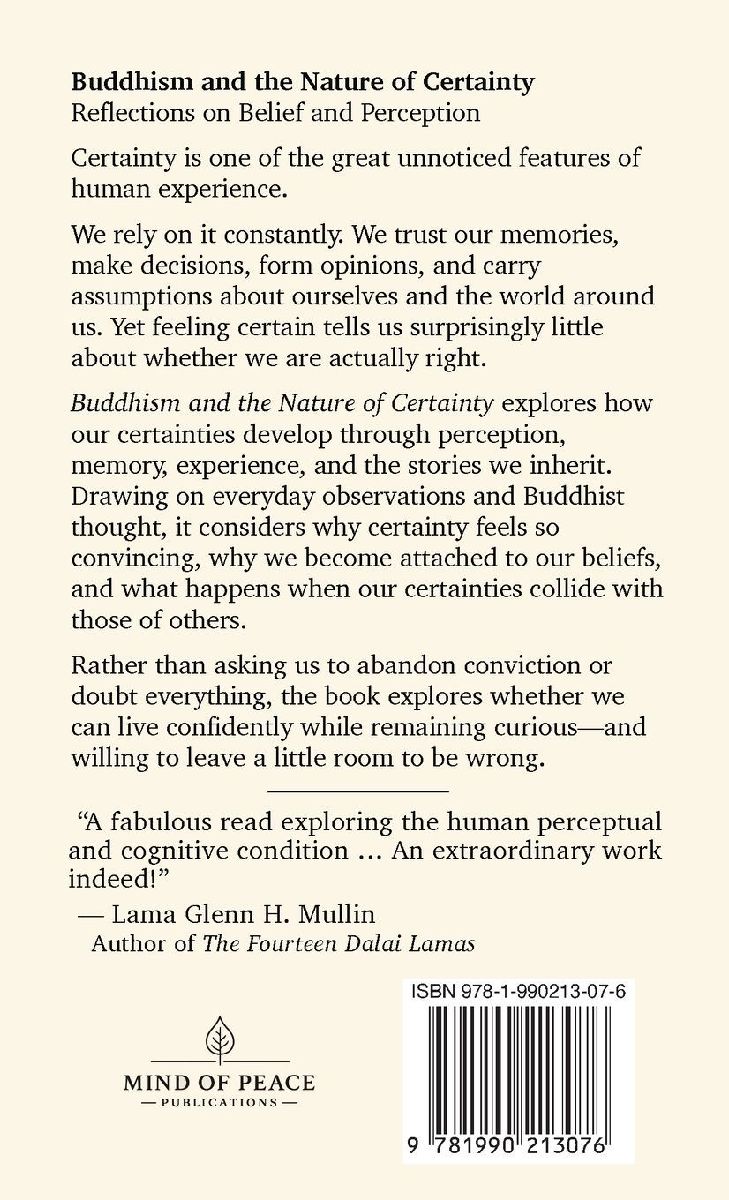
Buddhism and What We Take to Be True looks at this ordinary process closely. It is not an exposé of lies or an attempt to catch anyone out. Instead, it examines how experience is shaped into narratives that feel settled and reliable, even when they rest on partial or selective understanding.
Drawing on everyday situations-conversations, misunderstandings, remembered events-the book explores how these accounts take hold, not because all the facts are known, but because the mind prefers a finished story to an open one. What begins as description gradually comes to feel like reality itself.
Seen through a Buddhist lens, this is not treated as a problem to be solved or corrected, but as something to be noticed. By paying attention to how certainty forms and stabilizes, it becomes possible to see where stories tighten, where they simplify, and where they obscure.
Written in clear, accessible language, this book is intended for general readers as well as those with an interest in Buddhism. It offers no doctrine to adopt and no conclusions to defend-only a careful look at how we come to take things to be true, and what happens when that process is seen more clearly.