The Isle of Man has its own language, its own parliament, and its own crowded population of things that live just out of sight. They are never called fairies. They are Themselves, or the Little People, or the Little Fellows, and they wear red caps and green jackets and go hunting on horseback with packs of hounds in every colour of the rainbow.
Sophia Morrison collected these tales from the people who still told them. Born in Peel in 1859, she helped found the Manx Language Society in 1899, served as its honorary secretary, and edited the journal Mannin from 1913 until her death in 1917. Manx Fairy Tales, published in London in 1911, is the book she is remembered for.
Here are forty-three tales, songs and charms. The buggane of St Trinian's, who tore the roof off the church three times. The fynoderee, who mowed the meadows by night and flung away the clothes he was given. The moddey doo, the black dog that lay by the guard-room fire in Peel Castle. Tehi Tegi, who led six hundred men into the river. The witch of Slieu Whallian. The city under the sea.
They are told plainly, in the voices of the people who told them, and they are stranger and harder than the word "fairy" suggests. Children are taken. Wives are lost and not always recovered. The Little People are repaid for a kindness and are dangerous when they are not.
Morrison wrote in English on purpose. She was recording a culture for readers who had already lost its language, so that what the language carried would not be lost with it. The last native speaker of Manx died in 1974, fifty-seven years after she did.
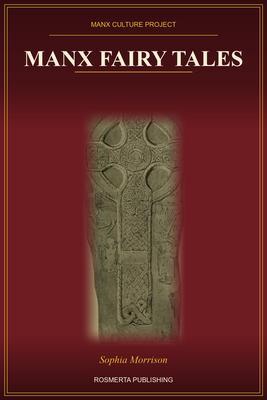
This Rosmerta Publishing edition presents the complete 1911 text. A new glossary of 78 entries explains the Manx words, names and places in the tales. Its meanings come from Morrison's own words where she gives them, and from the two historical dictionaries of Manx, Archibald Cregeen's of 1835 and John Kelly's of 1866, and every entry that rests on a dictionary names it. Where nothing supports a meaning, the entry says only what the tale shows.
Part of Rosmerta Publishing's Manx Culture Project, which recovers public domain work of Manx literary and cultural significance and puts it back in print.
Es wurden noch keine Bewertungen abgegeben. Schreiben Sie die erste Bewertung zu "Manx Fairy Tales" und helfen Sie damit anderen bei der Kaufentscheidung.