Robert Hugh Benson (1871-1914) was an English novelist, Catholic priest, essayist, and religious apologist whose writings explored the relationship between Christianity, intellectual life, and the transformation of society. Born on 18 November 1871 in Berkshire, England, he was the youngest son of Edward White Benson, who became Archbishop of Canterbury, and Mary Sidgwick Benson. Raised in a distinguished Anglican family, he grew up surrounded by theological scholarship and ecclesiastical tradition.
Educated at Eton College and Trinity College, Cambridge, Benson entered the Anglican ministry and was ordained in 1895. After a period of profound spiritual reflection, he converted to Roman Catholicism in 1903 and was ordained a Catholic priest in 1904. This decision profoundly shaped his literary career, inspiring works that examined religious authority, spiritual conversion, historical change, and the relationship between faith and reason.
Benson wrote extensively across several genres, including historical fiction, supernatural narratives, theological essays, devotional literature, and speculative fiction. His historical novels, such as *By What Authority? * (1904) and *Come Rack! Come Rope! * (1912), explore the persecution of English Catholics during the Reformation and Elizabethan periods. His most famous speculative novel, *Lord of the World* (1907), imagines a future dominated by secular ideology and political centralisation, culminating in a profound conflict between worldly power and Christianity.
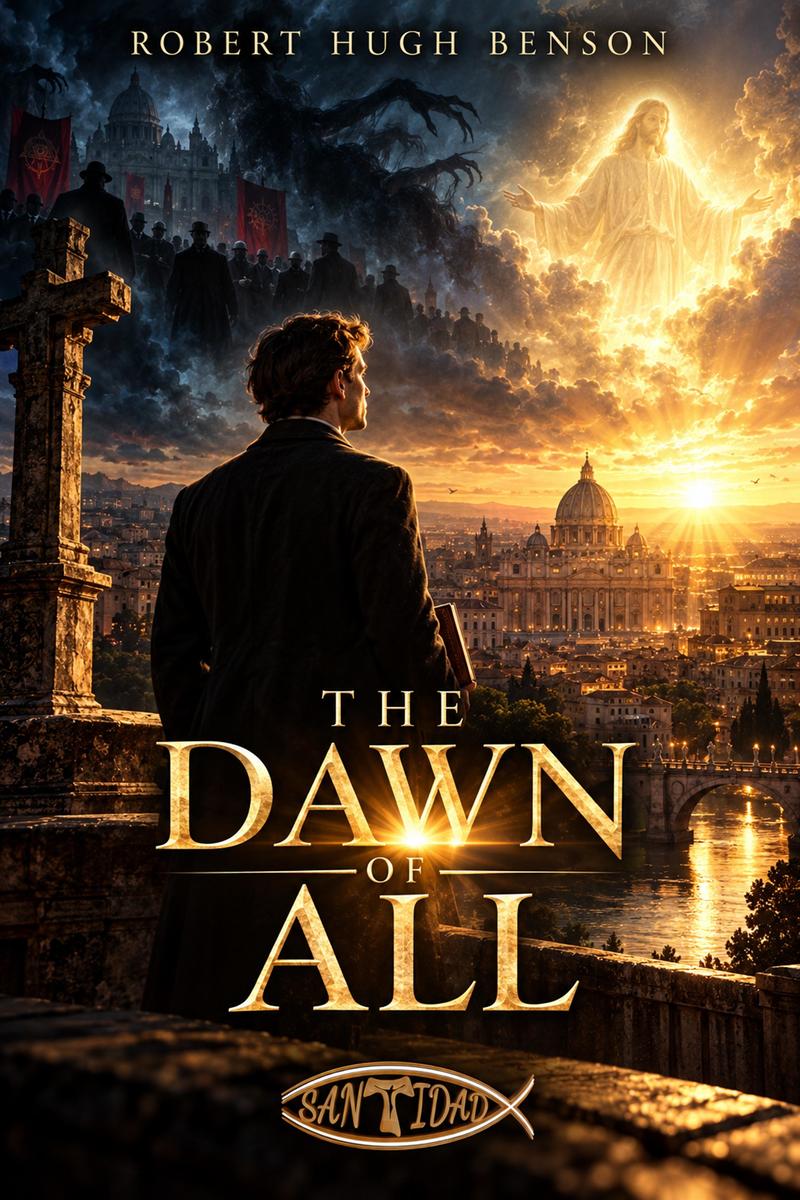
Published in 1911, *The Dawn of All* offers a contrasting vision of the future. Through a speculative narrative in which Catholicism has regained international influence, Benson examines the potential relationship between religious belief, scientific advancement, political organisation, and social progress. The novel reflects his conviction that Christianity should not be regarded merely as a historical inheritance, but as a living intellectual and spiritual force capable of shaping civilisation.
Benson's writing combines accessible storytelling, theological reflection, and imaginative engagement with the major cultural questions of his time. His works frequently challenge materialistic assumptions and explore the enduring significance of spiritual truth in individual and collective life.
In 1911, Benson received the ecclesiastical distinction of monsignor. He continued writing until his death on 19 October 1914, aged forty-two. His literary legacy remains significant within English Catholic literature, particularly for his exploration of religious history, speculative futures, and the relationship between faith and modern civilisation.