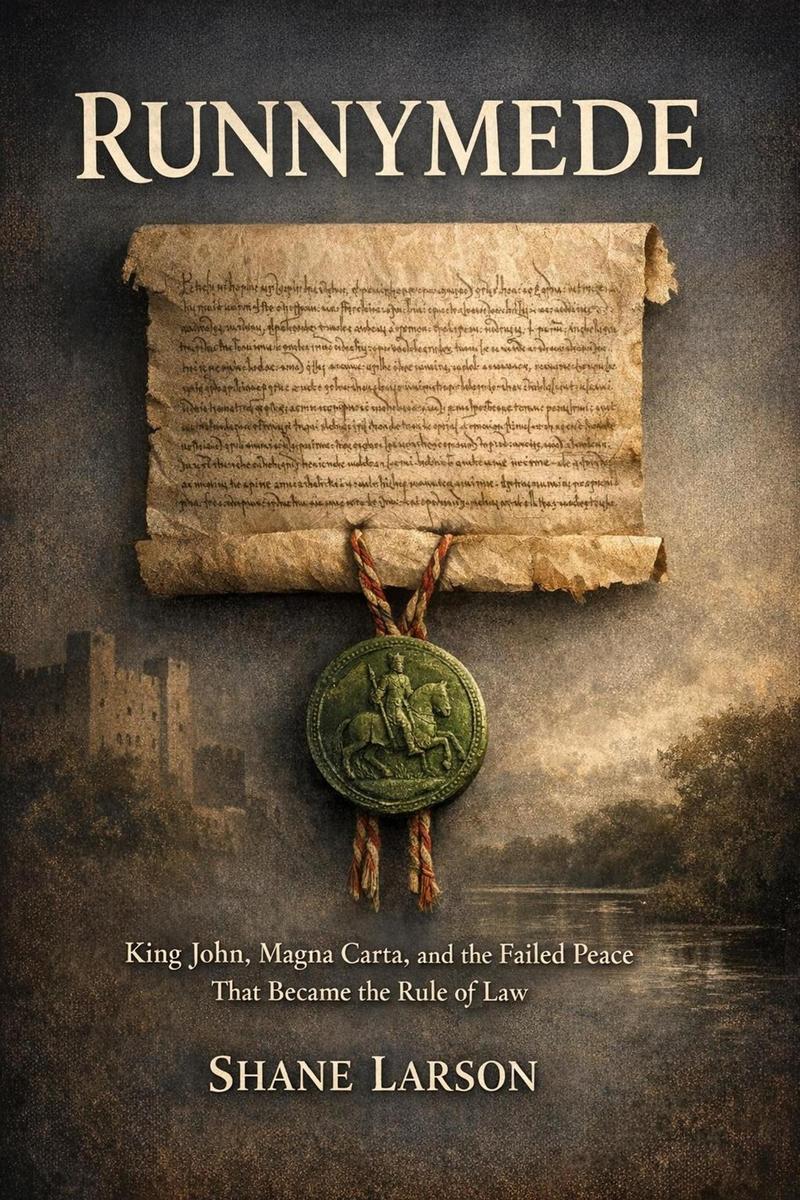
Magna Carta kept the peace for about ten weeks. Then the pope annulled it, England went to war, and the barons who had forced it on King John offered his crown to a French prince.
John inherited an empire from the Scottish border to the Pyrenees and lost most of it in five years. Normandy went in 1204, and a king who had always drawn on France now drew on England, in person. He levied scutage eleven times in sixteen years, took a thirteenth of everyone's movable goods, sold heirs their fathers' lands at 10, 000 marks a time, and let a baron's wife and son starve in a royal castle. He fought the pope through six years of interdict, then handed the kingdom to Rome as a fief to buy a protector. In July 1214 the coalition he had bought with English silver was broken at Bouvines, and he came home bankrupt, demanding another tax. The following May his barons took London while the citizens were at mass.
What they made him seal at Runnymede was not a constitution. It was a peace treaty, about 3, 500 words of Latin, and most of it is about money: inheritance fees fixed at £100, widows not to be sold in remarriage, debts to Jewish lenders during a minority, fish weirs out of the Thames, one measure for wine and one width for cloth. The famous promise that no free man would be taken except by the judgement of his peers sits unemphasised in the middle of that list. The last clause let twenty-five barons seize the king's castles if he broke his word. No king could live with it, and he did not try.
The charter survived because John died. Dysentery took him at Newark in October 1216 with half the kingdom sworn to Prince Louis, and the old soldier who became regent for his nine-year-old son reissued the charter in the boy's name to win the rebels back, with the enforcement clause cut out. It was issued again in 1217, and in 1225 in exchange for a tax. That text, not the one from the meadow, became English law, and three of its clauses are law today. Four centuries later Coke, the American colonists and the Fifth Amendment read into it things no baron had put there. The book tells both stories and keeps them apart.
What you'll learn:
This book is for you if:
The barons won a document that did not survive the summer. Everyone since has been standing on it.
Es wurden noch keine Bewertungen abgegeben. Schreiben Sie die erste Bewertung zu "Runnymede: King John, Magna Carta, and the Failed Peace That Became the Rule of Law" und helfen Sie damit anderen bei der Kaufentscheidung.








