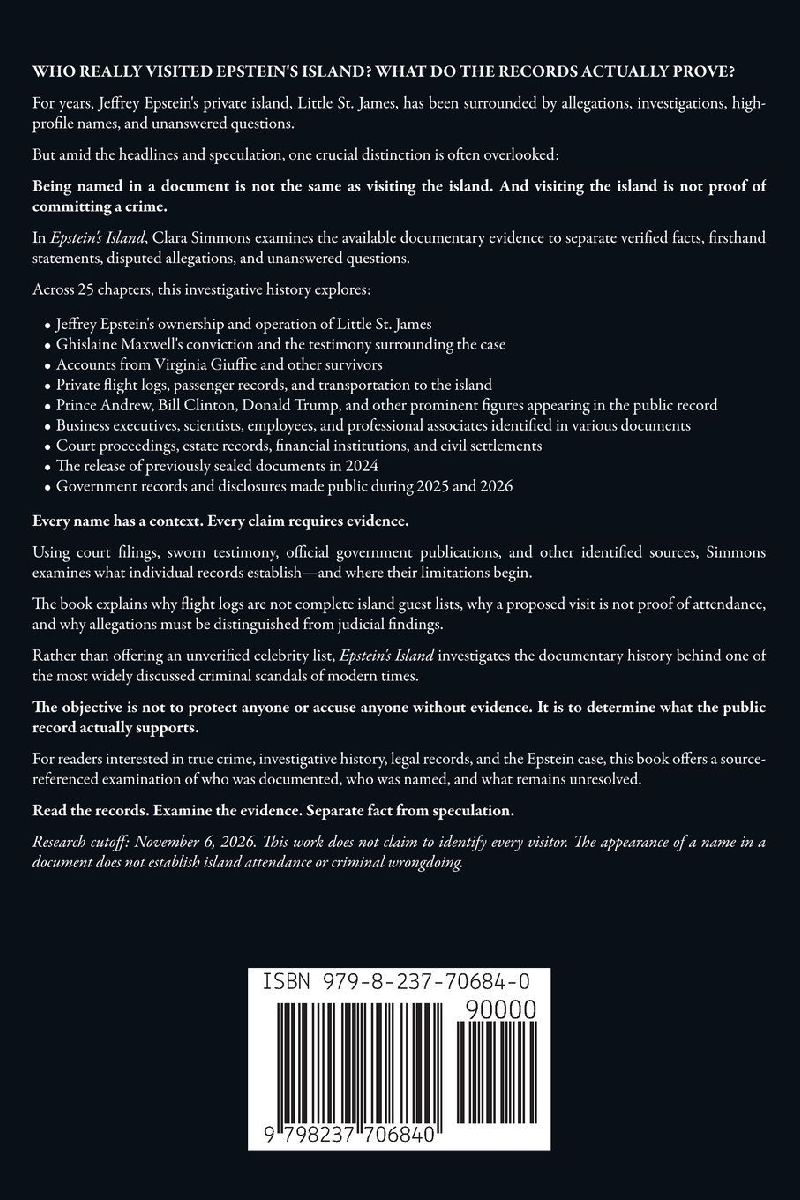
WHO REALLY VISITED EPSTEIN'S ISLAND? WHAT DO THE RECORDS ACTUALLY PROVE? For years, Jeffrey Epstein's private island, Little St. James, has been surrounded by allegations, investigations, high-profile names, and unanswered questions. But amid the headlines and speculation, one crucial distinction is often overlooked:Being named in a document is not the same as visiting the island. And visiting the island is not proof of committing a crime. In Epstein's Island, Clara Simmons examines the available documentary evidence to separate verified facts, firsthand statements, disputed allegations, and unanswered questions. Across 25 chapters, this investigative history explores:Jeffrey Epstein's ownership and operation of Little St. JamesGhislaine Maxwell's conviction and the testimony surrounding the caseAccounts from Virginia Giuffre and other survivorsPrivate flight logs, passenger records, and transportation to the islandPrince Andrew, Bill Clinton, Donald Trump, and other prominent figures appearing in the public recordBusiness executives, scientists, employees, and professional associates identified in various documentsCourt proceedings, estate records, financial institutions, and civil settlementsThe release of previously sealed documents in 2024Government records and disclosures made public during 2025 and 2026Every name has a context. Every claim requires evidence. Using court filings, sworn testimony, official government publications, and other identified sources, Simmons examines what individual records establish-and where their limitations begin. The book explains why flight logs are not complete island guest lists, why a proposed visit is not proof of attendance, and why allegations must be distinguished from judicial findings. Rather than offering an unverified celebrity list, Epstein's Island investigates the documentary history behind one of the most widely discussed criminal scandals of modern times. The objective is not to protect anyone or accuse anyone without evidence. It is to determine what the public record actually supports. For readers interested in true crime, investigative history, legal records, and the Epstein case, this book offers a source-referenced examination of who was documented, who was named, and what remains unresolved. Read the records. Examine the evidence. Separate fact from speculation. Research cutoff: November 6, 2026. This work does not claim to identify every visitor. The appearance of a name in a document does not establish island attendance or criminal wrongdoing.