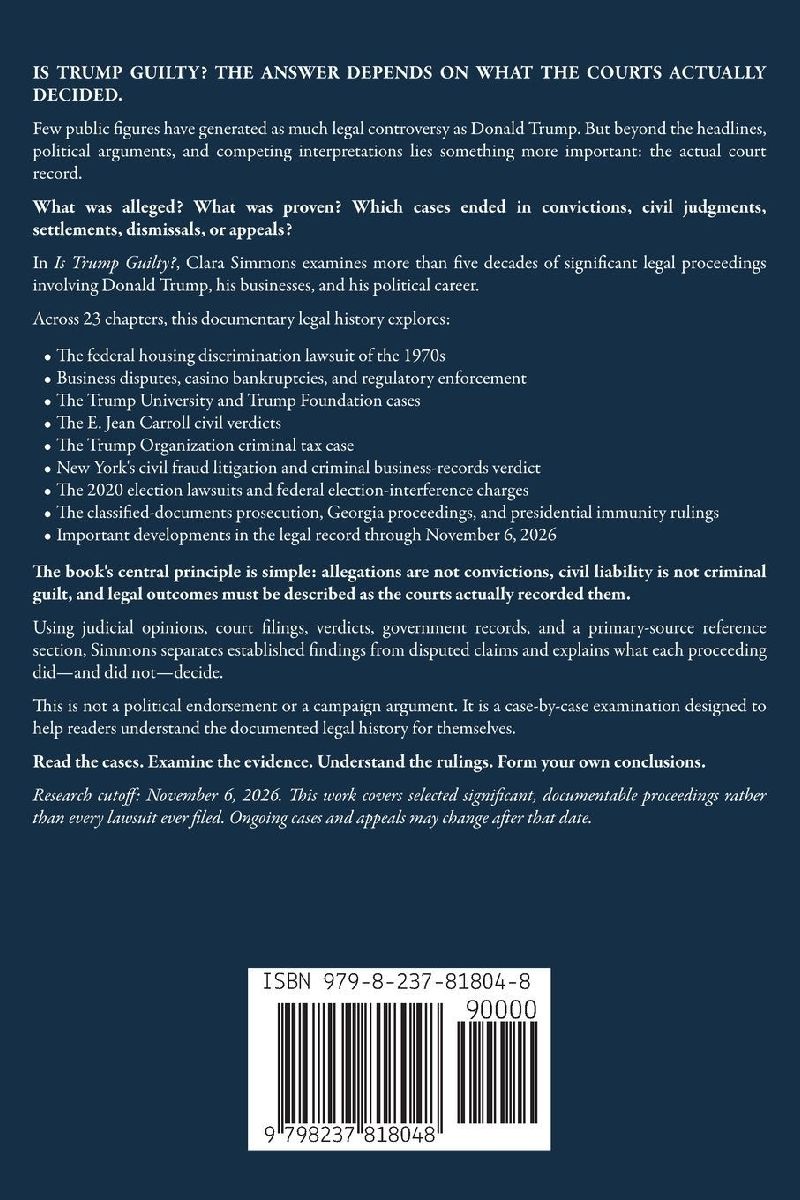
IS TRUMP GUILTY? THE ANSWER DEPENDS ON WHAT THE COURTS ACTUALLY DECIDED. Few public figures have generated as much legal controversy as Donald Trump. But beyond the headlines, political arguments, and competing interpretations lies something more important: the actual court record. What was alleged? What was proven? Which cases ended in convictions, civil judgments, settlements, dismissals, or appeals? In Is Trump Guilty? , Clara Simmons examines more than five decades of significant legal proceedings involving Donald Trump, his businesses, and his political career. Across 23 chapters, this documentary legal history explores:The federal housing discrimination lawsuit of the 1970sBusiness disputes, casino bankruptcies, and regulatory enforcementThe Trump University and Trump Foundation casesThe E. Jean Carroll civil verdictsThe Trump Organization criminal tax caseNew York's civil fraud litigation and criminal business-records verdictThe 2020 election lawsuits and federal election-interference chargesThe classified-documents prosecution, Georgia proceedings, and presidential immunity rulingsImportant developments in the legal record through November 6, 2026The book's central principle is simple: allegations are not convictions, civil liability is not criminal guilt, and legal outcomes must be described as the courts actually recorded them. Using judicial opinions, court filings, verdicts, government records, and a primary-source reference section, Simmons separates established findings from disputed claims and explains what each proceeding did-and did not-decide. This is not a political endorsement or a campaign argument. It is a case-by-case examination designed to help readers understand the documented legal history for themselves. Read the cases. Examine the evidence. Understand the rulings. Form your own conclusions. Research cutoff: November 6, 2026. This work covers selected significant, documentable proceedings rather than every lawsuit ever filed. Ongoing cases and appeals may change after that date.