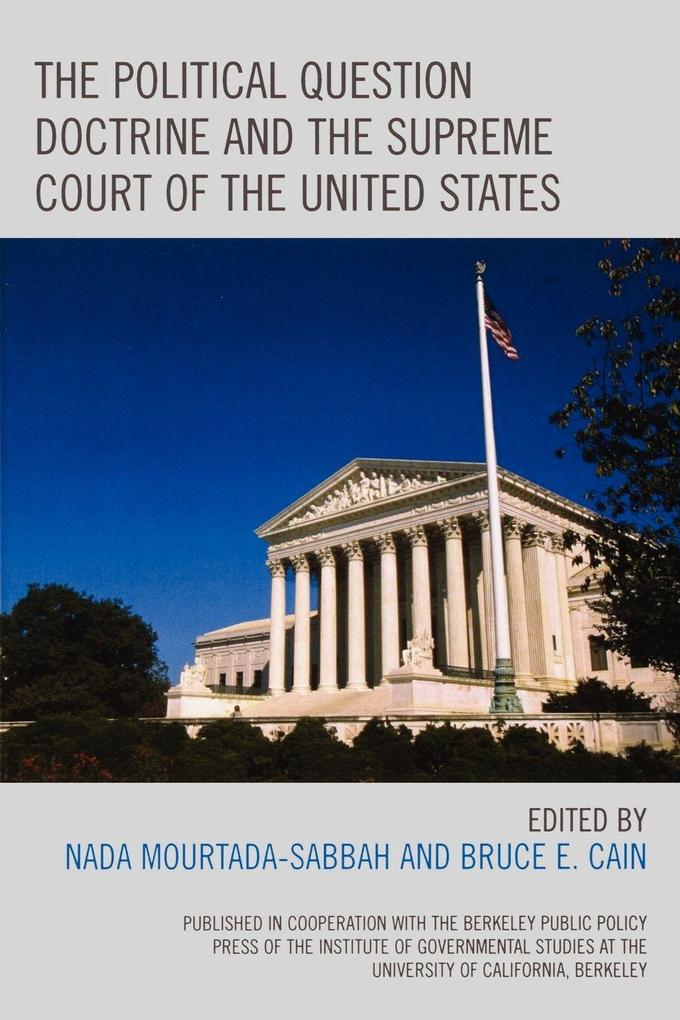
Historically, the political question doctrine has held the courts from resolving constitutional issues that are better left to other departments of government, as a way of maintaining the system of checks and balances. However, this book discusses the gradual changes in the parameters of the doctrine, including its current position dealing with increasingly extraterritorial concerns.
Inhaltsverzeichnis
Chapter 1 Introduction
Chapter 2 The Rise and Fall of the Political Question Doctrine
Chapter 3 Law and Prudence in the Law of Justiciability: The Transformation and Disappearance of the Political Question Doctrine
Chapter 4 Leaving the Empty Vessel of "Republicanism" Unfilled: An Argument for the Continued Nonjusticiability of Guarantee Clause Cases
Chapter 5 Two Centuries of Changing Political Questions in Cultural Context
Chapter 6 A Political Question By Any Other Name: Government Strategy in the Enemy Combatant Cases of Hamdi and Padilla
Chapter 7 Political Questions in France
Chapter 8 Who Should Be the Authoritative Interpreter of the Constitution? Why There Should Not Be a Political Question Doctrine
Chapter 9 Bush v. Gore: Too Political?
Chapter 10 Political Questions and Political Cases: The Evolving Justifications for Judicial Involvement in Politics
Chapter 11 Termination of the ABM Treaty and the Political Question Doctrine: Judicial Succor for Presidential Power
Chapter 12 Political Questions and Political Remedies