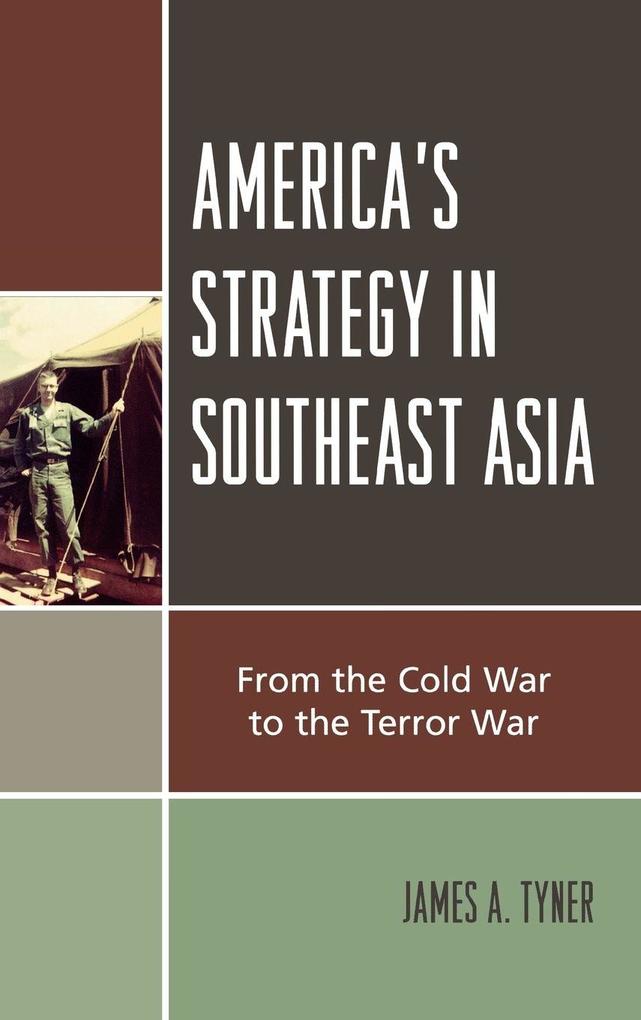
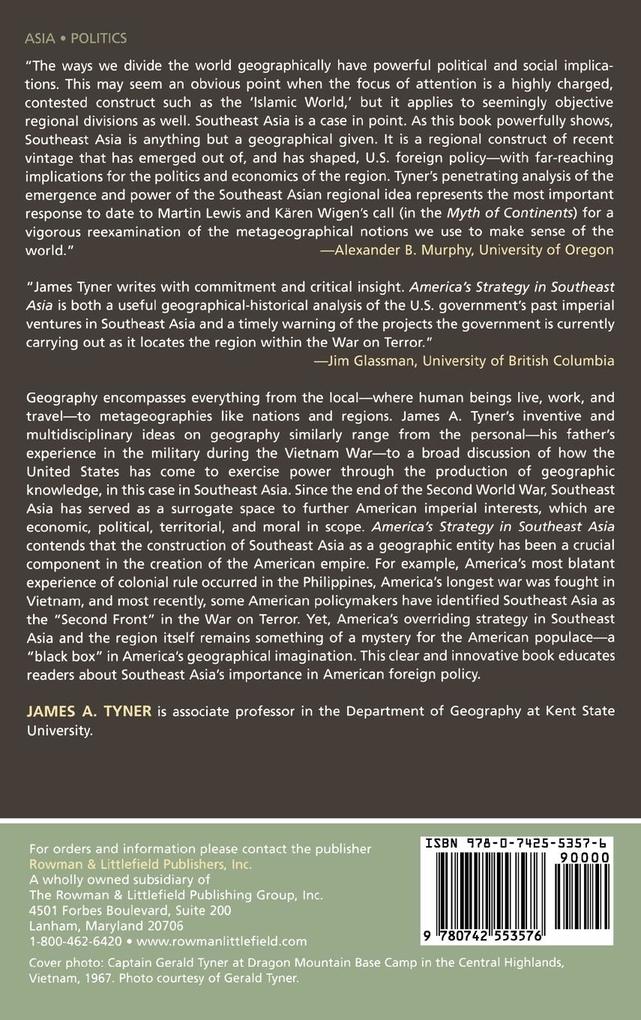
Since the end of the Second World War, Southeast Asia has served as a surrogate space to further American imperial interests, which are economic, political, territorial, and moral in scope. America's Strategy in Southeast Asia contends that the construction of Southeast Asia as a geographic entity has been a crucial component in the creation of the American empire. America's most blatant experience of colonial rule, for example, occurred in Southeast Asia (in the Philippines). America's longest war was fought in Southeast Asia (in Vietnam). And most recently, Southeast Asia has been identified by some American policy makers, rightly or wrongly, as the "Second Front" in the War on Terror. And yet, what has been America's overriding strategy in Southeast Asia?
Inhaltsverzeichnis
Chapter 1: Geographic Imperatives
Chapter 2: A Model Empire in Asia
Chapter 3: Peasant Wars and Imperial Capitalism
Chapter 4: The Tragedy of Geographic Negligence
Chapter 5: The Neoconservative Making of Southeast Asia
Chapter 6: The Guilt of Colonialism