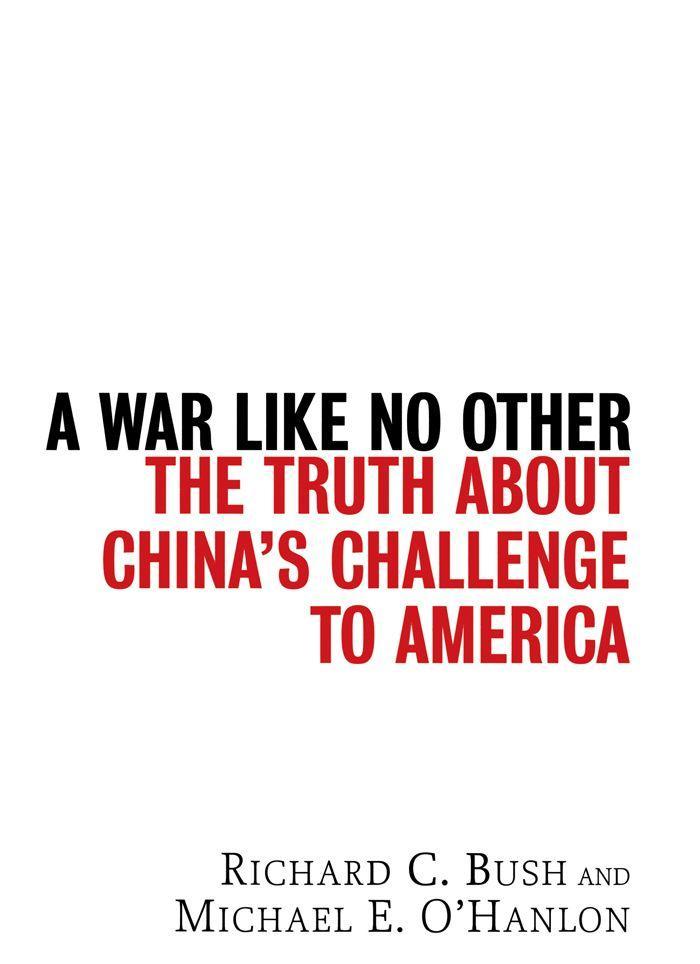
History is littered with the bodies of former great powers who failed to cope on and off the battlefield with the rise of a new power. China is fast becoming a true rival of the United States, and in this surprising, convincing book, two major foreign policy thinkers delve into the perilous consequences of this new dynamic. China now has the fourth largest economy, rivals Japan as a regional power in Asia, and controls an astonishing amount of our national debt. As the U. S. and China grapple with these unstable circumstances, unresolved issues - most likely Taiwan's future status - could destroy the burgeoning partnership. In the coming contest with China, only smart decisions by our leaders will ensure that it's fought with microchips and municipal bonds instead of nuclear bombs.
Nobody approaches the objectivity and precision of Bush and O'Hanlon when it comes to analysis of the military and political dimensions of the Taiwan issue. This is one challenge that U.S. policymakers and military strategists cannot afford to get wrong, and scholars cannot afford to ignore.
- Michael Green, former Senior Director for Asian Affairs National Security Council
The Showdown to Come
In 1995, during a heated discussion about that year's Taiwan crisis, a Chinese general remarked to a U.S. diplomat, ""In the end, you care more about Los Angeles than you do about Taipei."" In a single sentence, he both questioned the level of America's commitment to a longtime ally and threatened massive, perhaps nuclear, retaliation should the United States intervene militarily on Taiwan's behalf. In the end, President Clinton sent two aircraft carriers to the region, and China ceased its military exercises in the Taiwan Strait. A decade later, however, China is much stronger, both economically and militarily, and it holds a significant amount of America's national debt. If another Taiwan crisis should occur-as it almost certainly will-would China back down?
In A War Like No Other, you'll discover how little it would take to transform the close cooperation and friendly rivalry between the United States and the People's Republic of China into the first-ever shooting war between two nuclear powers. This chilling look into one possible future offers thoughtful advice to both governments on how to reduce the chances of such a nightmare actually occurring. Two Brookings Institution scholars offer specific prescriptions on how the two nations can improve communications, especially in times of crisis; avoid risky behavior, even when provoked; and, above all, remember which buttons not to push.
Inhaltsverzeichnis
Acknowledgments.
Chapter One. Thinking the Unthinkable.
Chapter Two. An Emerging Rival?
Chapter Three. Competition versus Opposition.
Chapter Four. The Lost Island.
Chapter Five. The Taiwan TinderBox.
Chapter Six. Adding Fuel to the Fire.
Chapter Seven.China Might Think It Would Win.
Chapter Eight. Spiraling Out Of Control.
Chapter Nine. From Standoff to Stand-Down.
Appendix: Why China Could Not Seize Taiwan.
Notes.
Index.