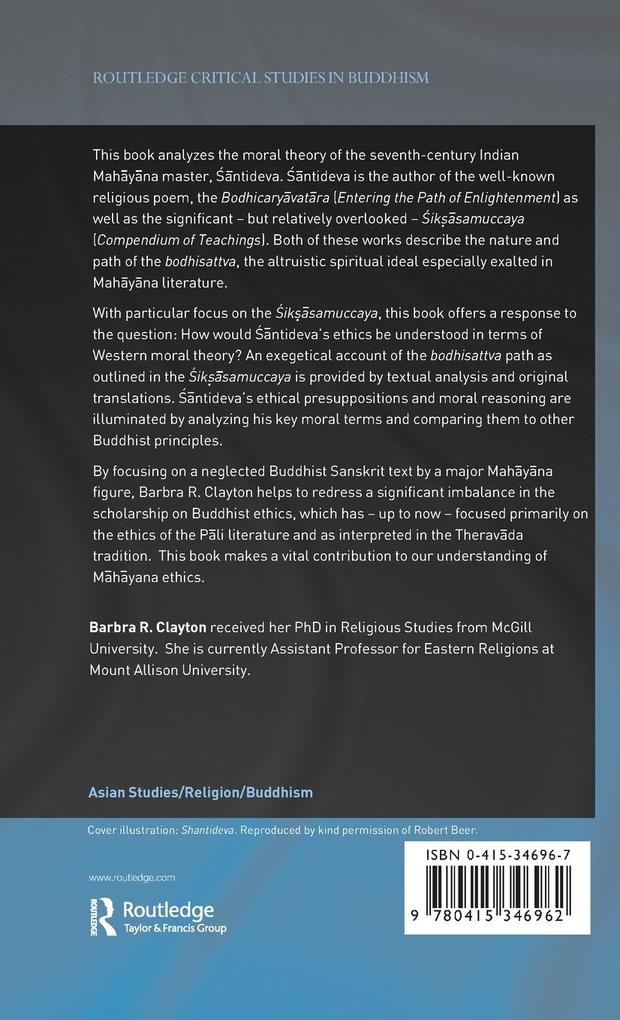
Analyzing the moral theory of the seventh century Indian Mahayana master, Santideva, particularly focusing on the neglected Sanskrit text, this important book helps to redress a significant imbalance in the scholarship on Buddhist ethics.
Inhaltsverzeichnis
1. Explanation of the Scope and Rationale for the Book, and the Questions to be Addressed 2. Discussion of the Author and his Work. Outline of the Structure of the Siksasamuccaya 3. Description of Santideva's Ethics Using Textual Analysis of the Siksasamuccaya 4. A Meta-Ethical Analysis of the Meanings and Rationale Associated with Key Moral Concepts, viz., Virtuous Conduct, Skillfulness, and Karmic Fruitfulness 5. Assessment of Santideva's Moral Theory and Comparison with Available Scholarship on Theravada and Mahayana Buddhist Ethics, and Comparison with Western Moral Theories 6. Response to the Question: Are Buddhist Ethics Homogeneous? Discussion of the Value of Comparative Ethics