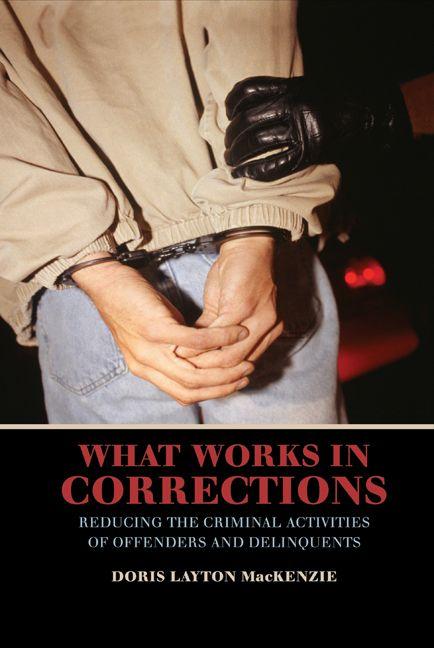
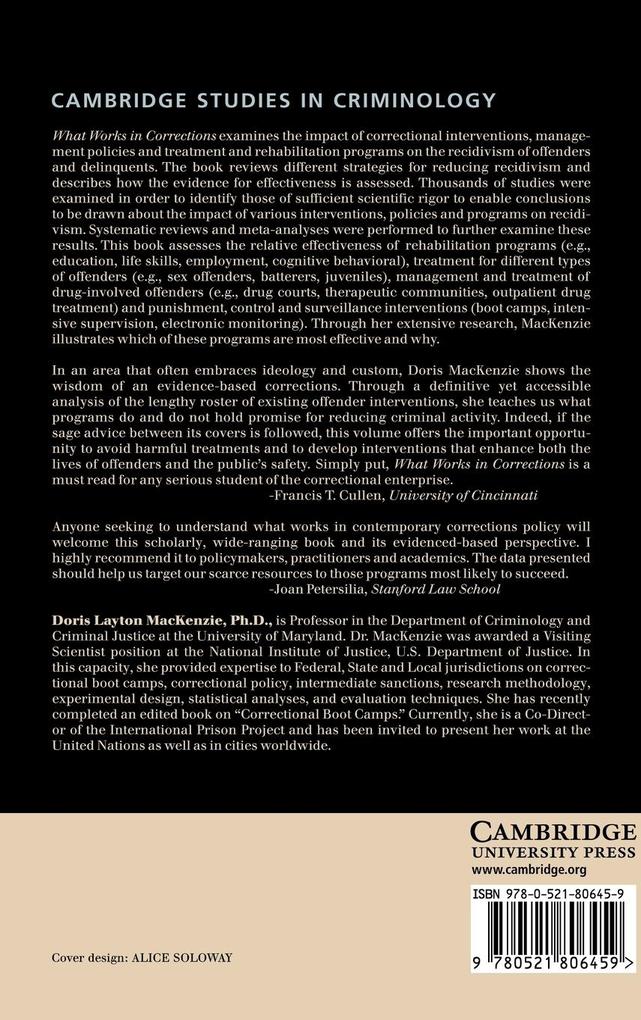
What Works in Corrections examines the impact of correctional interventions, management policies, treatment and rehabilitation programs on the recidivism of offenders and delinquents. It assesses the relative effectiveness of rehabilitation programs (e.g., education, life skills, employment, cognitive behavioral), treatment for different types of offenders (e.g. sex offenders, batterers, juveniles), management and treatment of drug-involved offenders (e.g., drug courts, therapeutic communities, outpatient drug treatment) and punishment, control and surveillance interventions (boot camps, intensive supervision, electronic monitoring). Through her extensive research, MacKenzie illustrates which of these programs are most effective and why.
Inhaltsverzeichnis
Part I. Strategies for Reducing Crime: 1. Strategies for reducing recidivism; 2. Assessing the evidence; 3. Incapacitation; 4. Perspectives on rehabilitation; Part II. The Effectiveness of Rehabilitation Programs: 5. Academic education and life skills training; 6. Vocational education, correctional industries and employment programs; 7. Cognitive behavioral therapy programs; Part III. Targeting Specific Types of Offenders: 8. Sex offender treatment; 9. Juveniles; 10. Domestic violence; Part IV. Management and Treatment of Substance Abusers: 11. Drug courts; 12. Outpatient and incarceration-based drug treatment; Part V. Control, Discipline and Punishment: 13. Correctional boot camps; 14. Intensive supervision and electronic monitoring; Part VI. Conclusions: 15. What works?