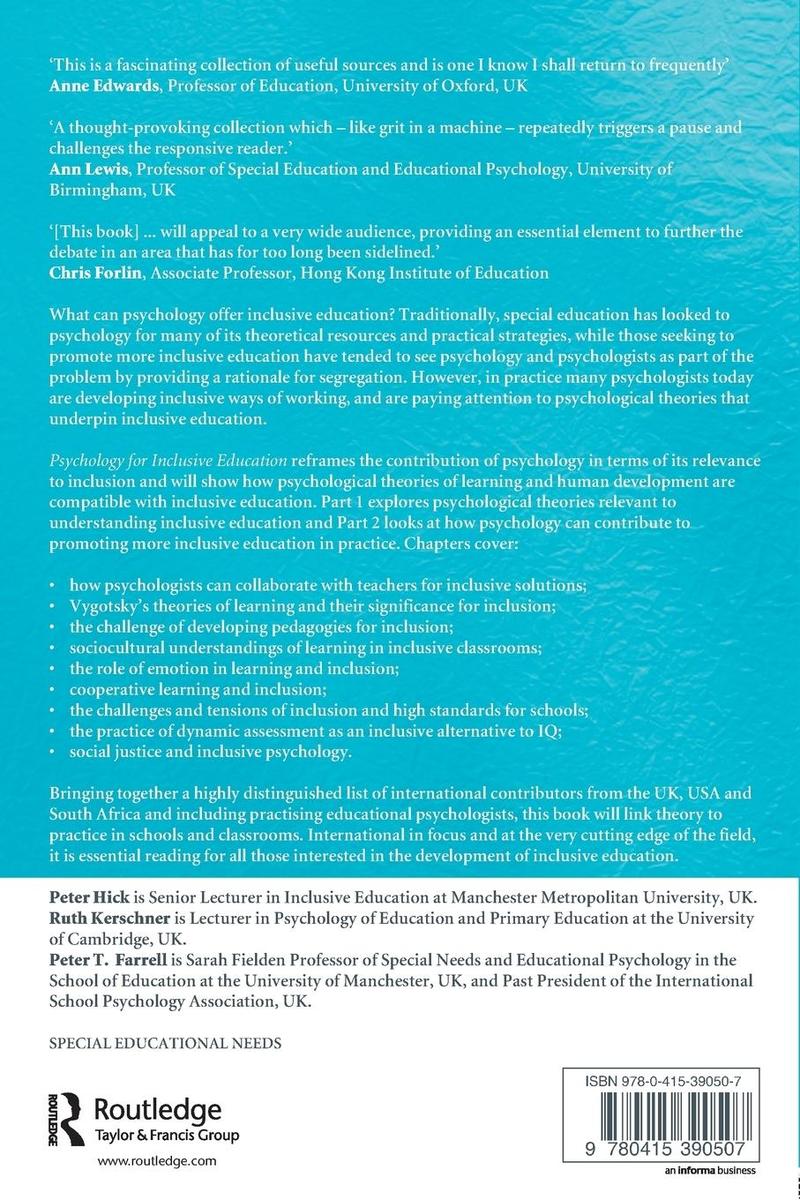
A study of the ways in which modern psychological theory can be used to support the practice of inclusive education in the classroom.
Inhaltsverzeichnis
1. Introduction Part 1: Understanding Inclusive Learning 2. An epistemology for inclusion. 3. Vygotsky and inclusion. 4. Towards an inclusive pedagogy. 5. Learning in inclusive classrooms. 6. The psychology of inclusion: the emotional dimension. Part 2: Promoting Inclusive Learning 7. Cooperative learning for inclusion . 8. Inclusive and effective schools: challenges and tensions. 9. Inclusive psychology and social transformation: responding to the challenges of the new South Africa. 10. Can educational psychologists be inclusive? 11. Dynamic assessment for inclusive learning. 12. Collaborative consultation: psychologists and teachers working together. Part 3: Challenges and Possibilities 13. Towards an interdisciplinary research agenda for inclusive education. 14. Reframing psychology for inclusive learning within social justice agendas