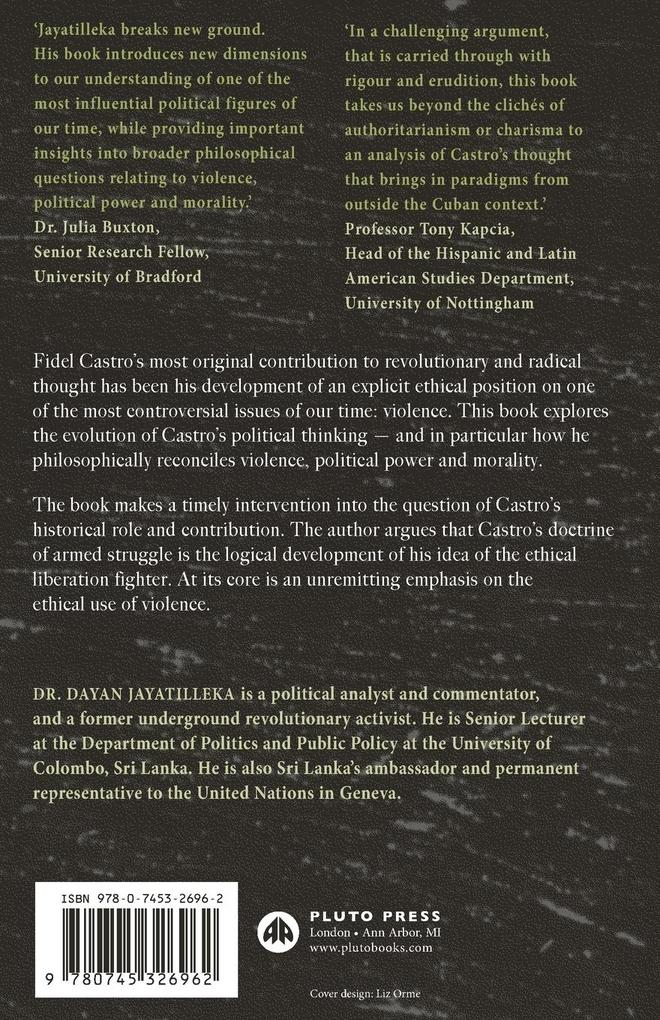
In this lucid analysis of the moral and ethical dimensions of Castro's thought, Jayatilleka breaks new ground. His book introduces new dimensions to our understanding of one of the most influential political figures of our time, while providing important insights into broader philosophical questions relating to violence, political power and morality. -- Dr Julia Buxton, Senior Research Fellow, Department of Peace Studies, University of Bradford In this lucid analysis of the moral and ethical dimensions of Castro's thought, Jayatilleka breaks new ground. His book introduces new dimensions to our understanding of one of the most influential political figures of our time, while providing important insights into broader philosophical questions relating to violence, political power and morality. -- Dr Julia Buxton, Senior Research Fellow, Department of Peace Studies, University of Bradford In the overcrowded and partisan field of studies of Cuba and of Fidel Castro, it is ... a genuinely new approach. ... This book takes us beyond the cliches of authoritarianism or charisma to an analysis of Castro's thought ... that brings in paradigms from outside the Cuban context and which force us to address conventional wisdoms about the much misunderstood leader. -- Tony Kapcia, Head of the Hispanic and Latin American Studies Department, University of Nottingham Jayatilleka puts forward a compelling case for incorporating the ethical component of Castro's practice and thinking, in particular his views on just war and just violence, into a more balanced judgement than is currently available of one of the most controversial statesmen of the twentieth century. -- Sebastian Balfour, London School of Economics and Political Science