"Wall's argument is not only effective but also well buttressed with an abundance of historical evidence.... This provocative, thoughtful work is a noteworthy contribution in US social history. Highly recommended."--T. Maxwell-Long, CHOICE
"Wall's book is a valuable study, clearly the product of many years' work, covering a lot of ground and filled with well-considered judgments. She has gone a long way in investigating exactly how various constituencies sought to shape Americans' understanding of their own political culture in the middle years of the twentieth century."--Doug Rossinow, Reviews in American History
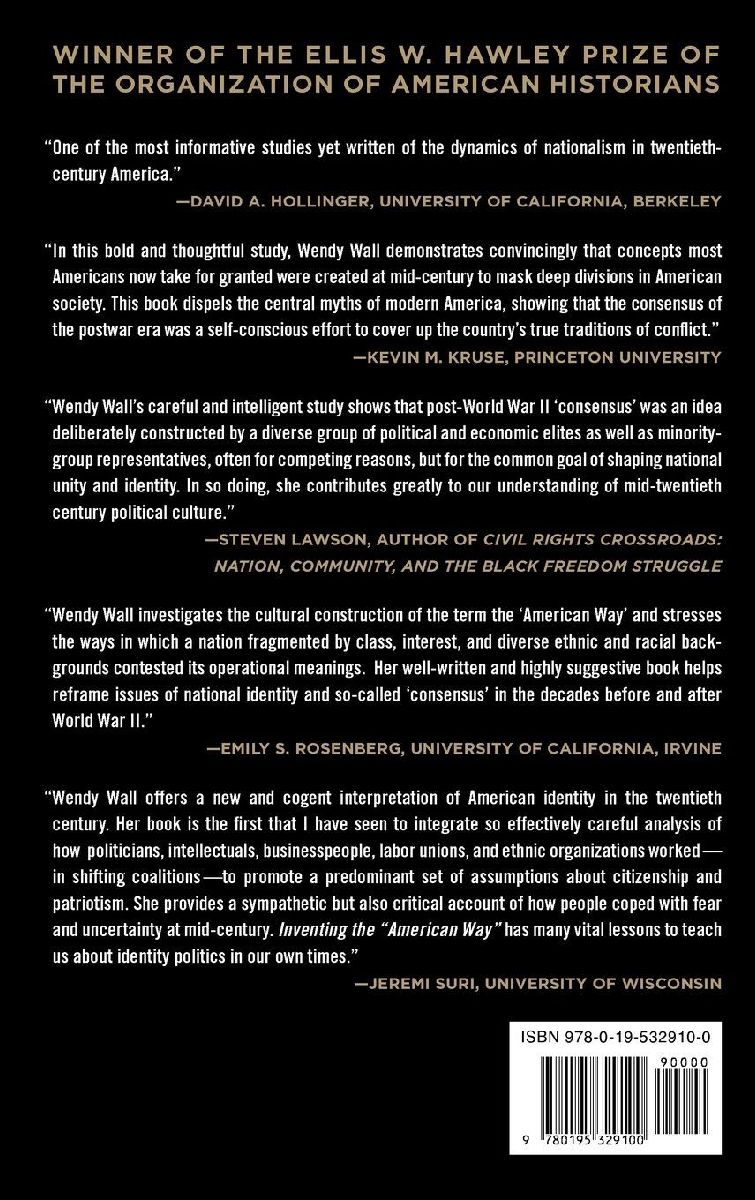
"This carefully documented and closely reasoned analysis of American national identity demonstrates the appeal of the ideal of 'consensus' for a great variety of socio-economic, religious, and cultural constituencies not only in the 1950s, but in the two previous decades. One of the most informative studies yet written of the dynamics of nationalism in twentieth century America."--David A. Hollinger, University of California, Berkeley
"In this bold and thoughtful study, Wendy Wall demonstrates convincingly that concepts most Americans now take for granted were created at mid-century to mask deep divisions in American society. This book dispels the central myths of modern America, showing that the consensus of the postwar era was a self-conscious effort to cover up the country's true traditions of conflict."--Kevin M. Kruse, Princeton University
"Wendy Wall's careful and intelligent study shows that post-World War II 'consensus' was an idea deliberately constructed by a diverse group of political and economic elites as well as minority-group representatives, often for competing reasons, but for the common goal of shaping national unity and identity. In so doing, she contributes greatly to our understanding of mid-twentieth century political culture."--Steven Lawson, author of Civil Rights Crossroads: Nation, Community, and the Bl