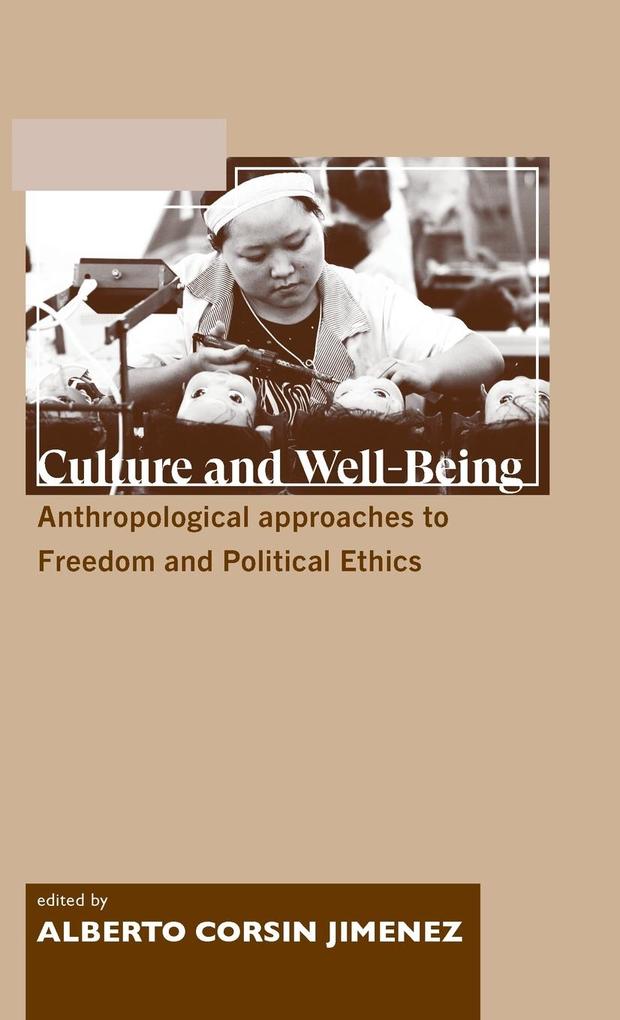
The concept of well-being has emerged as a key category of social and political thought, especially in the fields of moral and political philosophy, development studies and economics.
This book takes a critical look at the notion of well-being by examining what well-being means, or could mean, to people living in a number of different regions including Sudan, Nepal, Papua New Guinea, India, Sierra Leone and the UK.
The contributors take issue with some of the assumptions behind Western concepts of well-being. They explore what characterises a 'good life' and how this idea has been affected by globalisation and neoliberalism. The book makes a major contribution to social theory by presenting new analytical models that make sense of the changing shapes of people's life and ethical values.
Inhaltsverzeichnis
Acknowledgements Notes on contributors Introduction Well-being's re-proportioning of social thought Alberto Corsin Jimenez Part I: Distributive values 1. The impossibility of wellbeing: development language and the pathologisation of Nepal Ian Harper and Bryan Maddox 2. Good ways and bad ways: transformations of law and mining in Papua New Guinea1 Eric Hirsch Part II. Persons 3. Well-being: in whose opinion, and who pays? Wendy James 4. Primed for well-being: young people, diabetes and insulin pumps Griet Scheldeman 5. On well-being, being well and well-becoming: on the move with hospital porters Nigel Rapport Part III: Proportionalities 6. Measuring--or practicing--well-being? Michael Lambek 7. 'Realising the substance of their happiness': how anthropology forgot about homo gauisus Neil Thin 8. The intension and extension of well-being: transformation in diaspora Jain understandings of non-violence James Laidlaw 9. Well-being in anthropological balance: remarks on proportionality as political imagination Alberto Corsin Jimenez Index