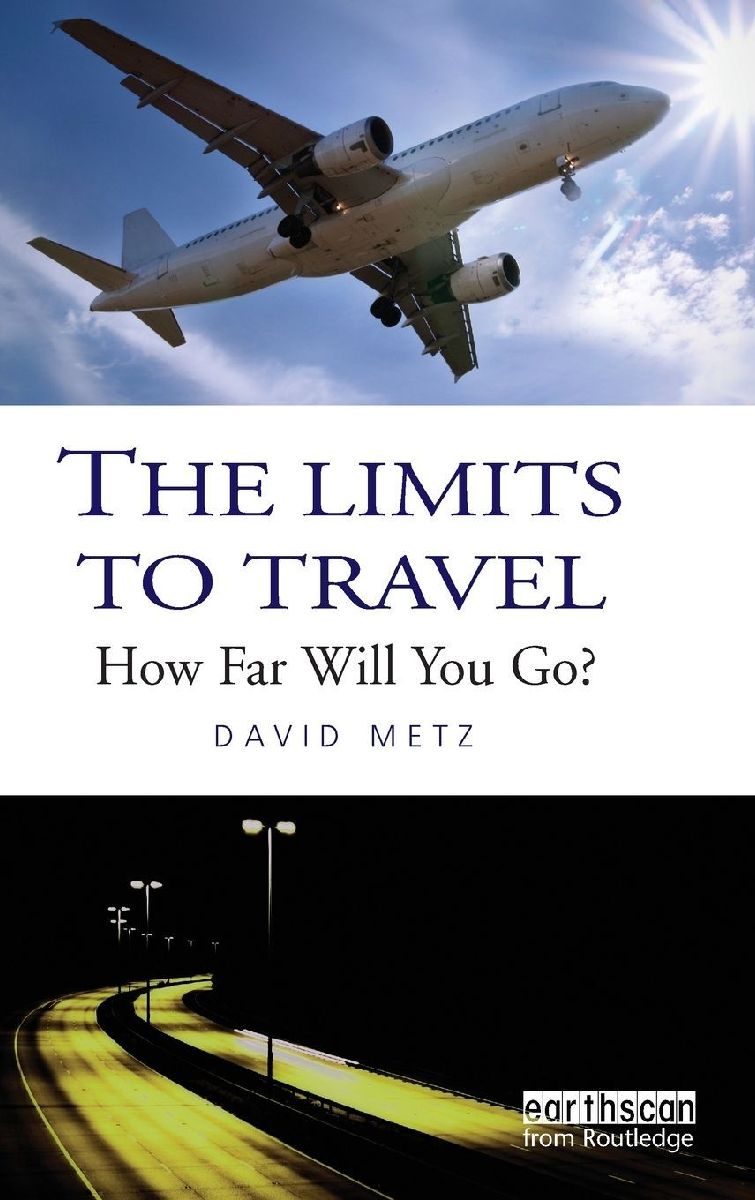
As affluence grows, it gets easier to travel faster and further. But research shows that, despite this, the average daily travel time in all societies remains steady at roughly an hour. The implication is that people are choosing to increase the distance they regularly travel, rather than opting for shorter journey times. While this clearly offers advantages in terms of reaching more desirable locations, the disadvantages are numerous - not least that of anthropogenic climate change, to which transport is the fastest growing contributor. However, the stability of travel time does not form part of the present conceptual framework of transport policy makers and professionals - consequently, misconceived decisions lead to unintended outcomes.
In this intriguing book, David Metz examines the inadequacies inherent in the current thinking, along with the resulting problems, such as pollution, congestion and noise. He highlights the threat from the rapid increase in car use in China and India, and explores the general travel experience, public vs. private transport, and transport technology. In considering to what extent transport could be avoided, he arrives at a new paradigm to underpin sustainable transport policies, based on the fundamental characteristics of human mobility and focusing on quality, not quantity, of travel.
Inhaltsverzeichnis
Faster and Farther * Detriments and Damage * Old and New Thinking * Village and Globe * Delays and Diversions * Public versus Private * Slower Progress * Telecommunications to the Rescue? * Transport Technology * Quality Not Quantity * Index