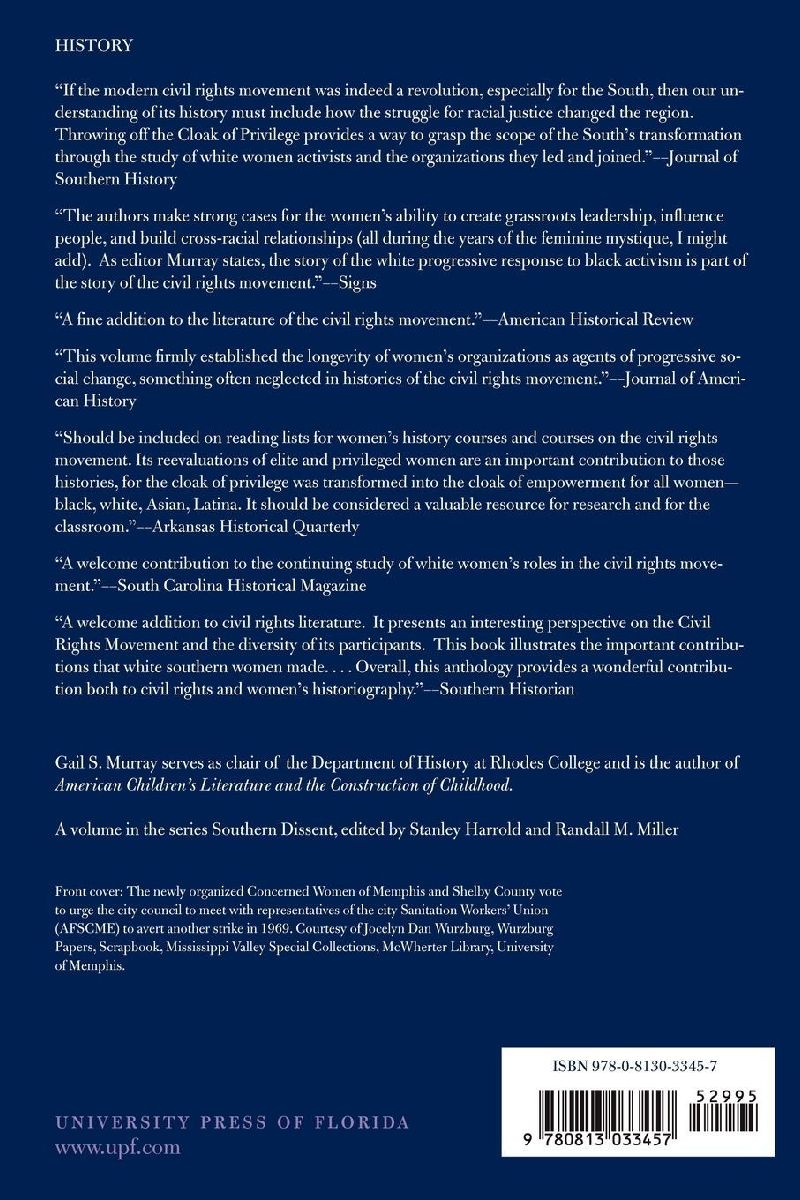
While playing the southern lady for the white political establishment, thousands of mostly middle-class, middle-aged, married white women become grassroots activists in America's civil rights movement, sometimes at the cost of friendships, status, economic security, and family support. The original essays in this collection tell who these women were, why they became committed to racial justice and equal opportunity, and how they organized to change southern society. The women worked within a range of national and local institutions, both segregated and biracial. Their stories, largely unknown, span half of the 20th century from the New Deal to the early 1970s and took place across the South from Louisville to New Orleans. In the ongoing struggle for human dignity and a voice in American life, this book adds a new and necessary dimension to our understanding of both biracial activism and white anti-racism.
Inhaltsverzeichnis
- Contents- Introduction- 1. Dorothy Tilly and the Fellowship of the Concerned, by Edith Holbrook Riehm- 2. Crusaders and Clubwomen: Alice Norwood Spearman Wright and Her Women' s Network, by Marcia G. Synnott- 3. Frances Freeborn Pauley: Using Autobiography and Biography to Interpret a White Woman' s Activist Identity, by Kathryn L. Nasstrom- 4. Anne Braden and the "Protective Custody" of White Southern Womanhood, by Catherine Fosl- 5. "How Shall I Sing the Lord' s Song?": United Church Women Confront Racial Issues in South Carolina, 1940s-1960s, by Cherisse R. Jones- 6. Challenging the Segregationist Power Structure in Little Rock: The Women' s Emergency Committee to Open Our Schools, by Laura A. Miller- 7. Elite White Female Activism and Civil Rights in New Orleans, by Shannon L. Frystak- 8. White Privilege, Racial Justice: Women Activists in Memphis, by Gail S. Murray