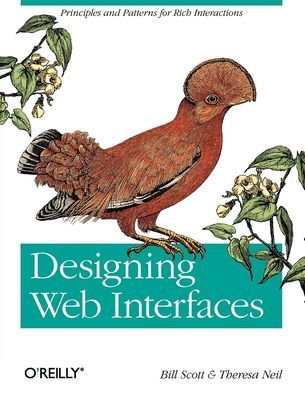
Want to learn how to create great user experiences on today's Web? In this book, UI experts Bill Scott and Theresa Neil present more than 75 design patterns for building web interfaces that provide rich interaction. Distilled from the authors' years of experience at Sabre, Yahoo!, and Netflix, these best practices are grouped into six key principles to help you take advantage of the web technologies available today. With an entire section devoted to each design principle, Designing Web Interfaces helps you:
Make It Direct-Edit content in context with design patterns for In Page Editing, Drag & Drop, and Direct Selection
Keep It Lightweight-Reduce the effort required to interact with a site by using In Context Tools to leave a "light footprint"
Stay on the Page-Keep visitors on a page with overlays, inlays, dynamic content, and in-page flow patterns
Provide an Invitation-Help visitors discover site features with invitations that cue them to the next level of interaction
Use Transitions-Learn when, why, and how to use animations, cinematic effects, and other transitions
React Immediately-Provide a rich experience by using lively responses such as Live Search, Live Suggest, Live Previews, and more
Designing Web Interfaces illustrates many patterns with examples from working websites. If you need to build or renovate a website to be truly interactive, this book gives you the principles for success.
Inhaltsverzeichnis
Foreword
Preface
Make It Direct
Chapter 1: In-Page Editing
Chapter 2: Drag and Drop
Chapter 3: Direct Selection
Keep It Lightweight
Chapter 4: Contextual Tools
Stay on the Page
Chapter 5: Overlays
Chapter 6: Inlays
Chapter 7: Virtual Pages
Chapter 8: Process Flow
Provide an Invitation
Chapter 9: Static Invitations
Chapter 10: Dynamic Invitations
Use Transitions
Chapter 11: Transitional Patterns
Chapter 12: Purpose of Transitions
React Immediately
Chapter 13: Lookup Patterns
Chapter 14: Feedback Patterns
Principles and Patterns for Rich Interaction
Colophon