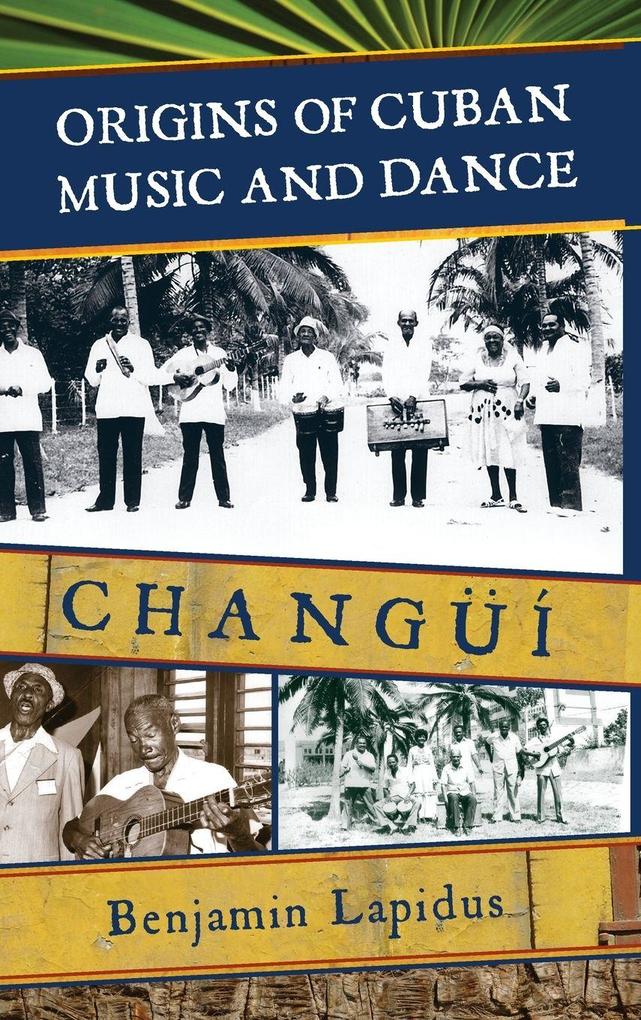
Lapidus synthesizes his ethnographic and historical research to present an indispensable text on one of Cuba's and the Caribbean's least documented and studied musical and dance genres. The author argues for an ethnographically-based alternative to the standard evolutionary construction of the Cuban son's historical development by showing that changui, nengon, and kiriba-the son's perceived "antecedents"-are not only distinct in their performative dimensions, but they also continue to contribute in their own idiosyncratic ways to the local and contemporary soundscape of Guantanamo. Herein lies Lapidus's major scholarly contribution to the kind of popular music studies that eschews a linear evolutionary framework of music history and instead focuses on the meanings generated where memory, history, performance, and the local, national, and transnational intersect. -- David F. Garcia, assistant professor, ethnomusicology, UNC - Chapel Hill In this ground-breaking study of changui, Ben Lapidus sheds light on a lesser-known but important genre of Cuban music, providing detailed analysis of its musical form while at the same time situating it in the broader context of eastern Cuba's unique history and music culture. -- Peter Manuel, CUNY Graduate Center