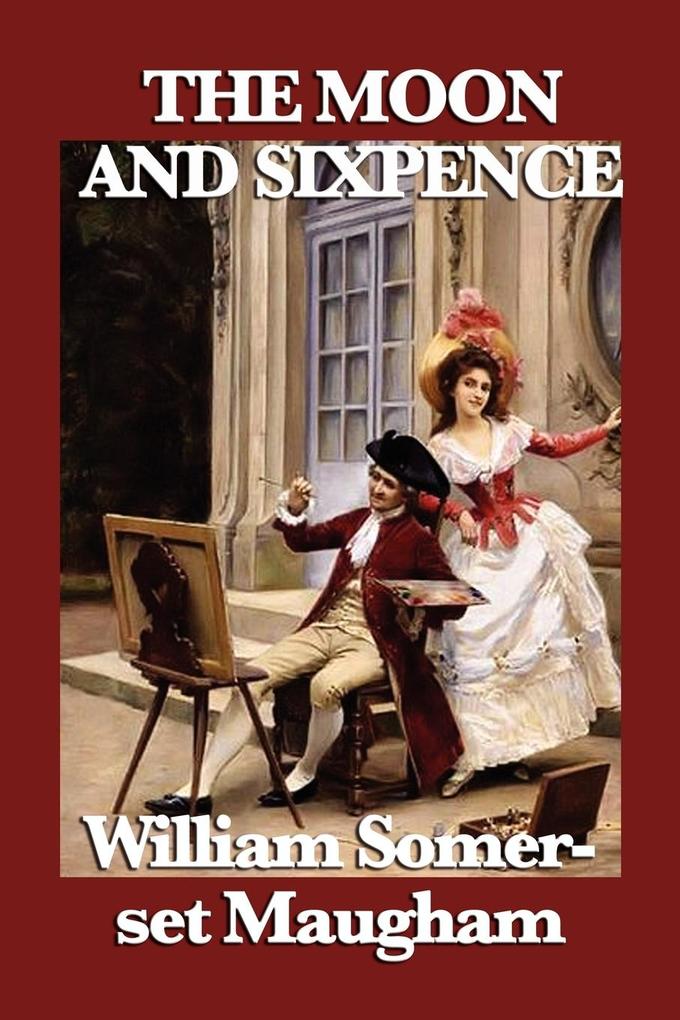
A novel of artistic ambition and personal rupture, loosely inspired by the life of Paul Gauguin, examining the costs of creative independence.
First published in 1919, The Moon and Sixpence presents the story of Charles Strickland, a London stockbroker who abandons his conventional life in pursuit of painting. The narrative follows his movement from England to Paris and ultimately to the South Pacific, tracing a trajectory shaped by detachment from social obligation and an uncompromising commitment to artistic purpose. Maugham employs a restrained narrative voice, allowing Strickland's character to emerge through observation and reported encounter rather than direct exposition.
The novel considers the tension between societal expectation and individual vocation, situating artistic creation within a broader framework of moral ambiguity and personal cost. Its settings reflect both metropolitan and colonial environments, contributing to a sustained examination of displacement and identity. The work remains a central example of early twentieth-century literary fiction concerned with the figure of the artist and the conditions under which art is produced.