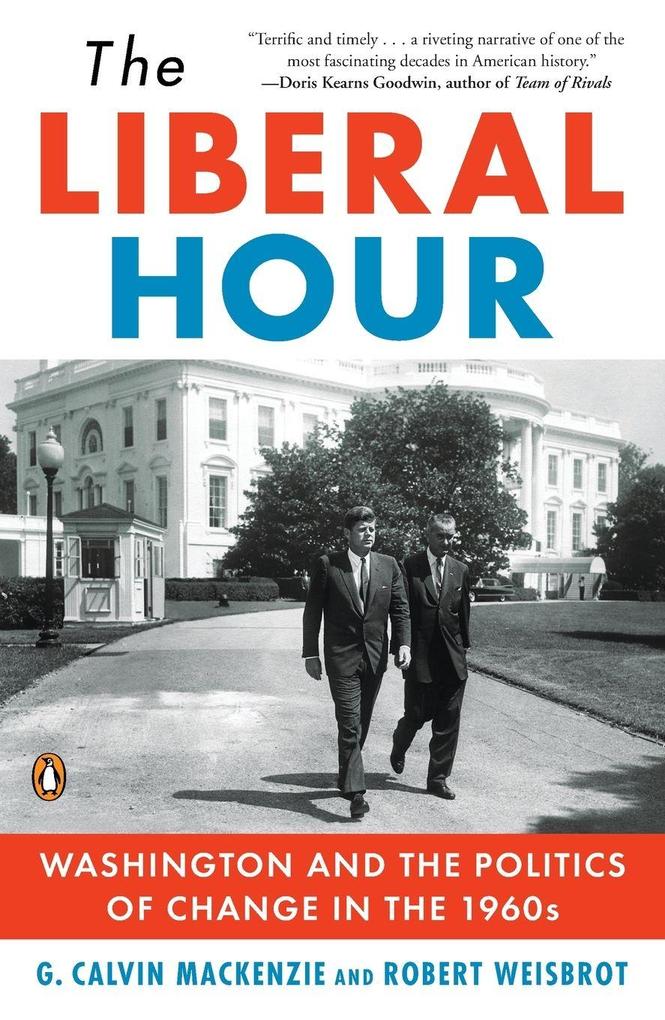
A behind-the-scenes analysis of lesser-known influences that fueled the social reforms of the 1960s explores the pivotal ways in which Washington was an effective engine of change, citing the roles of JFK, Johnson, and lower-profile politicians who were critical to the passage of key legislation. Reprint.
An engaging be hind-the-scenes look at the lesser-known forces that fueled the profound social reforms of the 1960s
Provocative and incisive , The Liberal Hour reveals how Washington, so often portrayed as a target of reform in the 1960s, was in fact the era's most effective engine of change. The movements of the 1960s have always drawn the most attention from the decade's chroniclers, but it was in the halls of government-so often the target of protesters' wrath-that the enduring reforms of the era were produced. With nuance and panache, Calvin Mackenzie and Robert Weisbrot present the real-life characters-from giants like JFK and Johnson to lesser-known senators and congressmen-who drove these reforms and were critical to the passage of key legislation. The Liberal Hour offers an engrossing portrait of this extraordinary moment when more progressive legislation was passed than in almost any other era in American history.
Inhaltsverzeichnis
The Liberal HourIntroduction
1. America in the Postwar Years
2. Politics and the Liberal Arc
3. The Federal Colossus
4. Free At Last
5. To Protect the Planet
6. The Hour of Maximum Danger
7. A TVA in the Mekong Valley
8. The End of the Liberal Hour
Conclusion: The Durable Decade
Acknowledgments
Notes
Index