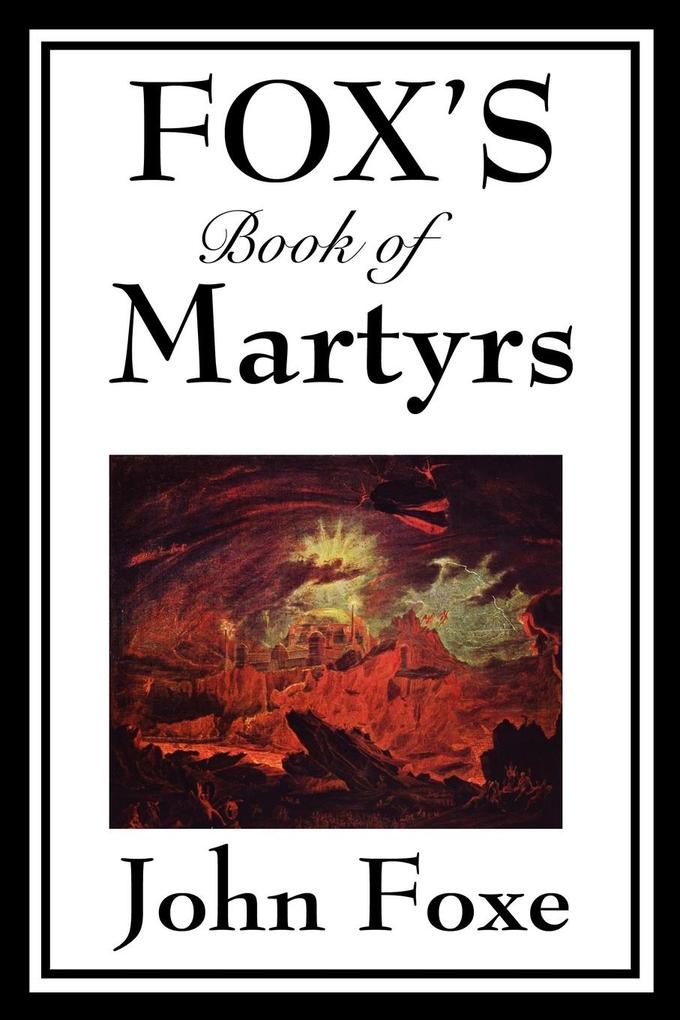
John Foxe's Fox's Book of Martyrs is one of the most influential works of Protestant history ever published: a vast account of Christian persecution, martyrdom, religious conviction, and Reformation conflict. First published in English in 1563 as Actes and Monuments, the book gathered together accounts of the suffering and deaths of early Christian and Protestant martyrs, with particular force in its treatment of England, Scotland, and the violent religious struggles of the sixteenth century. The Library of Congress headings for one later edition identify the work with martyrs, persecution, and church history, which remains the right core positioning for this edition.
Foxe wrote as a committed Protestant historian and polemicist, and the result is not a neutral chronicle in the modern academic sense. It is a work of witness, argument, memory, and religious identity, preserving stories of men and women who suffered for conscience and faith while also shaping centuries of English Protestant imagination. Its scenes of trial, imprisonment, execution, and steadfast belief made it one of the defining religious books of early modern England. The work is widely known as Foxe's Book of Martyrs, though its original title was Actes and Monuments, and it was first published in English by John Day in 1563.
For readers of church history, Protestant history, Reformation studies, Christian martyrdom, religious persecution, and classic religious literature, Fox's Book of Martyrs remains a landmark text. It is grim, partisan, powerful, historically important, and impossible to separate from the religious conflicts that produced it. More than four centuries after its first appearance, it remains one of the central documents of English Protestant memory and one of the most enduring accounts of Christian martyrdom in print.